 listicle
Benefits of Custom-Made Kitchen Carcasses
Table of Contents
- What Custom-Made Kitchen Carcasses Offer
- Custom vs Standard Kitchen Cabinets: Why the Difference Matters
- Perfect Fit for Irregular Rooms and Wasted Space
- Kitchen Carcass Materials and Durability
- Maximising Storage with Custom Kitchen Storage Solutions
- Long-Term Value and Investment Returns
- How the Design and Installation Process Works
- Frequently Asked Questions
Last Updated: October 18, 2026
What Custom-Made Kitchen Carcasses Offer
Understanding the benefits of custom made kitchen carcasses starts with recognising they are the structural foundation of bespoke cabinetry, built to exact specifications for your space rather than adapted from standard sizes. At Wjskitchenwarehouse, we've spent over 30 years helping homeowners and trade professionals understand why the carcass matters far more than most realise.
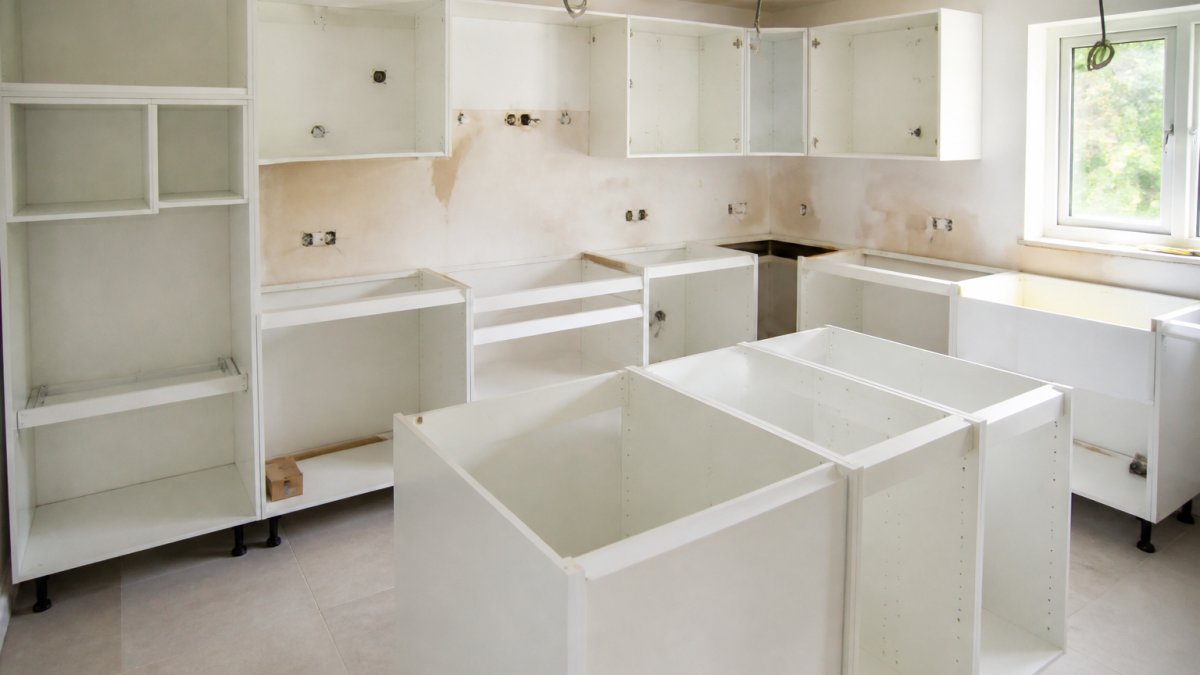
A carcass is the skeletal structure of a cabinet: the sides, back, top, and bottom panels that provide rigidity and support, to which doors, drawers, and fittings attach. Choosing custom-made kitchen carcasses means investing in a foundation engineered for your kitchen's exact dimensions, layout, and demands.
The difference shows at installation. Stock cabinets come in fixed widths (typically 300mm, 600mm, 900mm increments), and your kitchen rarely fits those exact dimensions. Custom-made kitchen carcasses eliminate that compromise.
Quality comes down to three factors: material selection, construction method, and internal bracing. A well-built carcass distributes weight evenly, resists moisture and heat without warping, and stays stable for decades. Poor construction leads to sagging shelves, misaligned doors, and binding drawers within months.
Custom vs Standard Kitchen Cabinets: Why the Difference Matters
Stock cabinets arrive pre-assembled in standard sizes. You fit your kitchen around them. Custom-made kitchen carcasses work the opposite way: they're built around your kitchen's actual dimensions and layout.
A stock 600mm cabinet leaves a 150mm gap in a 750mm space, forcing wasted space, a filler panel, or a rethink. A custom carcass fits that 750mm space perfectly, gaining usable storage you'd otherwise lose.
Standard cabinets also fix internal shelf spacing, so you're stuck if you need deeper or shallower shelves. Custom-made kitchen carcasses let you specify internal configurations that match how you actually use your kitchen.
Material quality differs too. Many stock cabinets use particleboard with thin veneers, which swells and delaminates at the edges within a few years, especially with cooking steam. Custom carcasses can use higher-grade plywood, solid timber, or moisture-resistant engineered boards that last far longer.
| Factor | Stock Cabinets | Custom-Made Carcasses |
|---|---|---|
| Sizing | Fixed increments (300mm, 600mm, 900mm) | Built to exact space dimensions |
| Installation fit | Gaps and fillers often needed | Seamless fit without waste |
| Internal configuration | Standardised shelf spacing | Tailored to your storage needs |
| Material options | Limited to factory stock | Full range of quality materials |
| Lead time | Immediate | Typically 14 days |
| Cost | Lower initial price | Higher upfront, better long-term value |
Perfect Fit for Irregular Rooms and Wasted Space
Most kitchens aren't perfectly rectangular. Sloped ceilings, protruding pipes, uneven walls, and awkward alcoves are the norm. Stock cabinets simply cannot adapt to these realities.
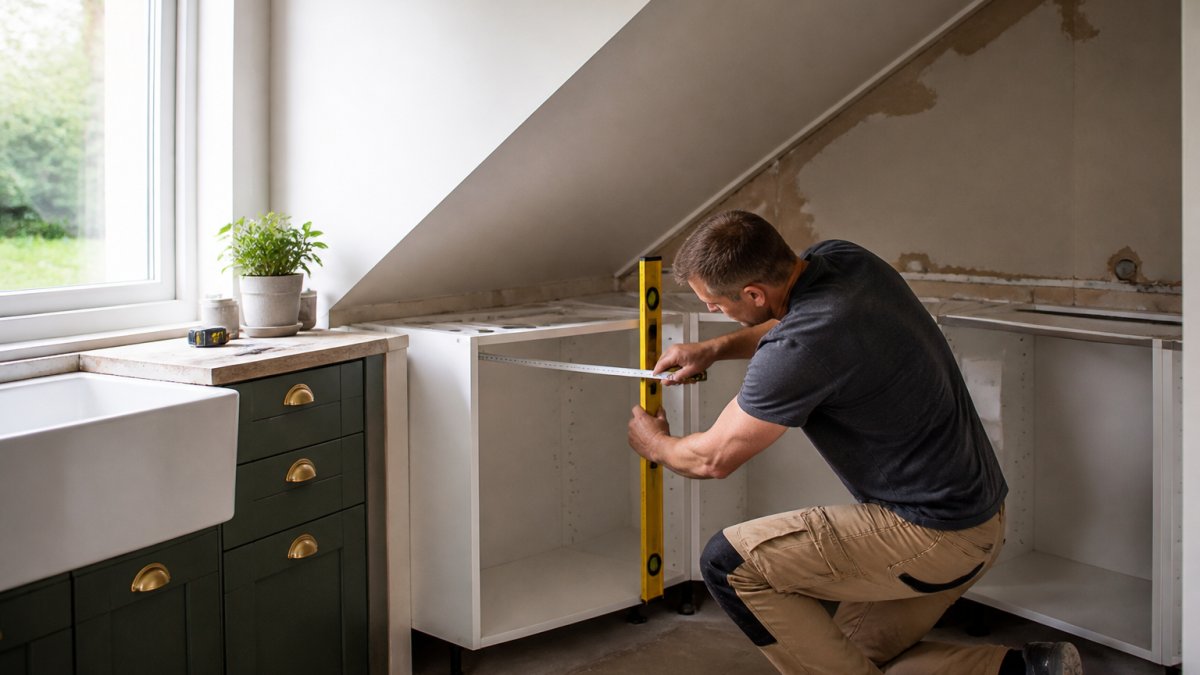
Custom-made kitchen carcasses solve this entirely. A 1,247mm space gets a 1,247mm carcass; a sloping or bowed wall gets a carcass engineered to sit flush; an unusable corner gets a purpose-built solution.
This flexibility transforms problem areas, an under-stair alcove, an angled corner, the space above a boiler, into functional storage. Many homeowners recover 15-20% more usable storage simply by filling spaces standard cabinets can't reach.
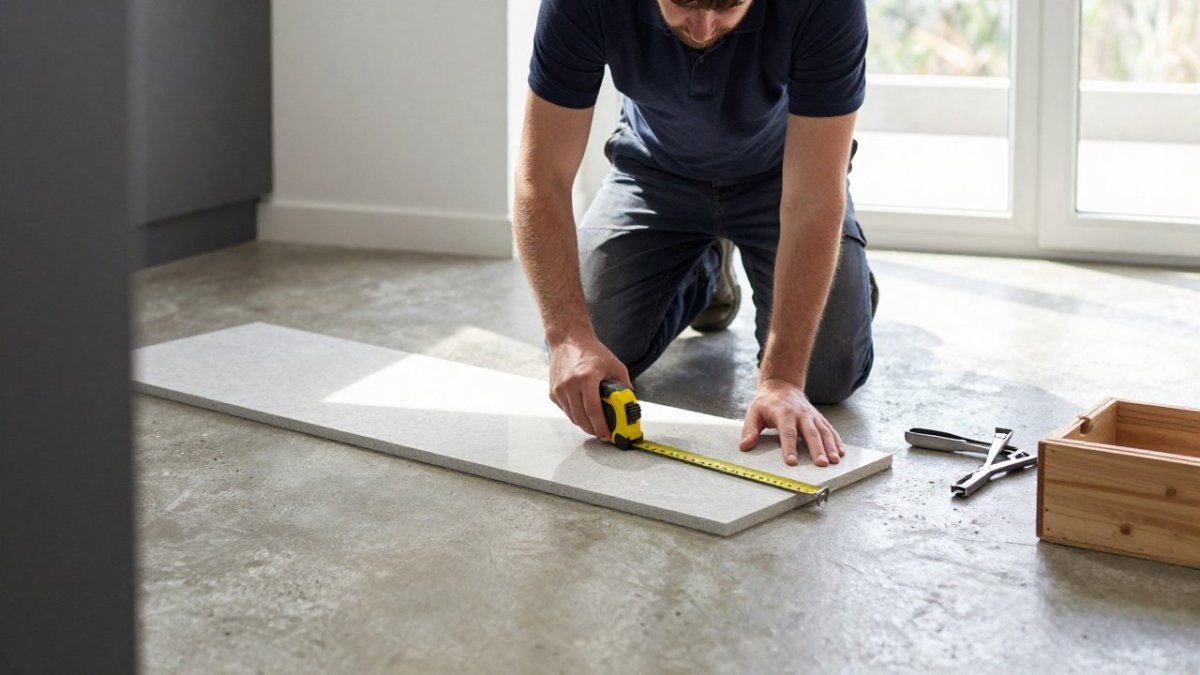
Installation also gets simpler: the carcass arrives ready to fit, so your fitter isn't spending hours cutting and shaving cabinets, reducing labour time and the risk of damage.
Kitchen Carcass Materials and Durability
The material your carcass is built from determines how it performs over time, but material alone is only half the story.
The carcass is the structural box: two side panels, a top and bottom, a back, and often a fixed shelf or rail. Doors, drawer fronts, handles, and decorative finishes are separate.
Board types and what they mean in practice
Particleboard (chipboard) is the budget option: inexpensive and flat, but moisture makes it swell and lose screw-holding strength.
Plywood is the benchmark for durability in most bespoke workshops: it resists moisture far better, holds fixings reliably, and stays rigid under load. Quality plywood carcasses commonly perform for 15-20 years.
Moisture-resistant engineered boards, moisture-resistant MDF or HMR board, sit between the two: more stable than standard particleboard and cheaper than plywood, but not matching plywood's longevity in wet zones.
Construction details that matter more than the board name
Thickness: 18mm is the sensible minimum for structural panels. Budget carcasses using 15mm or 12mm sides flex and transfer stress to joints and fixings.
Joints: glued and screwed joints with a rebate or dado where the top and bottom meet the sides are stronger than butt joints held only by cams.
Back panel: a thin 3mm hardboard back nailed to the rear adds little rigidity.
Edging: exposed board edges are the first place moisture gets in.
Performance near moisture, heat, and load
Near sinks and dishwashers, specify moisture-resistant boards, sealed edges, and a sealed or protected back, never a standard board with taped edges.
Around ovens and hobs, heat is the issue.
Under heavy worktops, particularly stone or composite, the carcass must be level, rigid, and adequately supported.
For heavy drawers and pull-outs, the carcass must hold fixings securely. Plywood and solid timber hold screws far better than particleboard, so drawer-heavy designs benefit most from better board.
Your choice depends on your priorities. Staying long-term? Specify 18mm plywood or solid timber with rebated backs and solid edging. Renovating to sell within five years?
Maximising Storage with Custom Kitchen Storage Solutions
Generic storage layouts waste space. A standard cabinet might have three fixed shelves, but your items need different configurations, some tall, some shallow, some needing easy access.
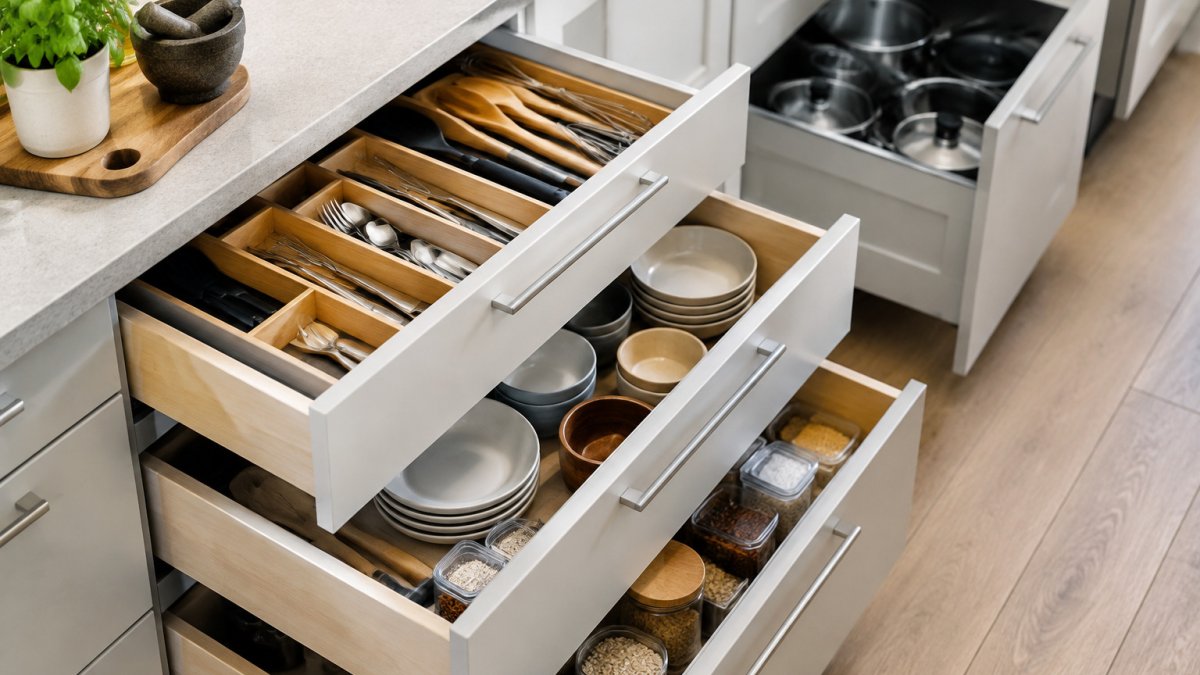
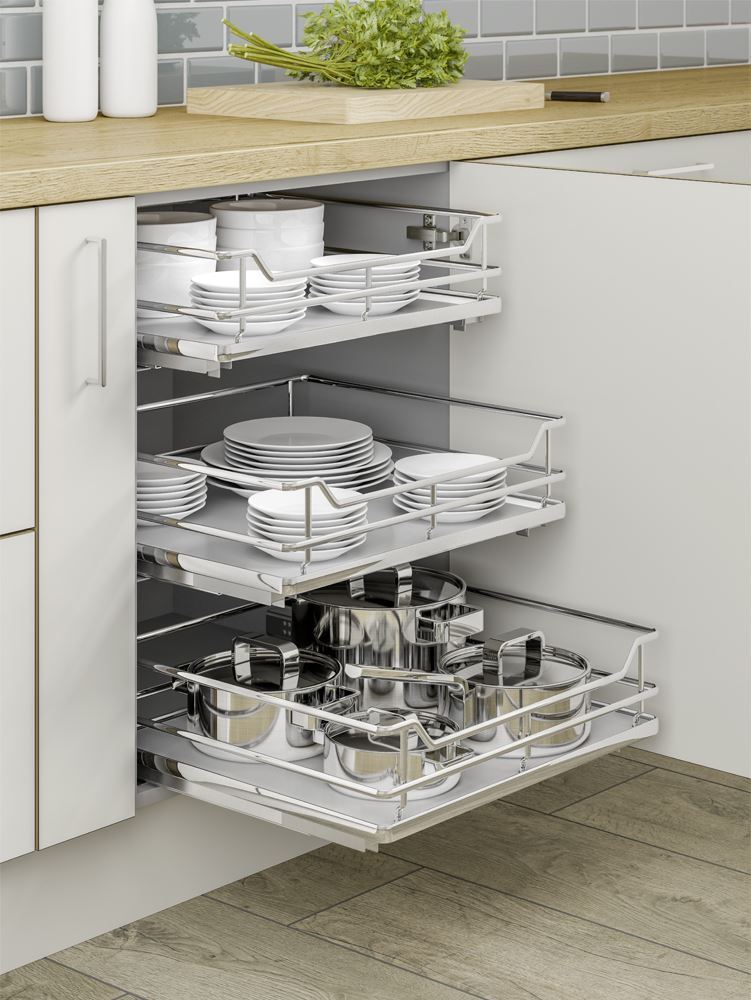
Custom-made kitchen carcasses let you design the internal layout precisely: pull-out drawers for pots and pans, sliding shelves under load, a dedicated spice rack zone, deep shelving for platters and shallow shelving for everyday plates. Every millimetre works for you.
This extends to access, too. A corner cabinet is notoriously hard to reach in stock kitchens; a custom carcass can incorporate a carousel or pull-out corner solution that brings items forward automatically, turning wasted space into your most convenient storage.
The practical outcome: most homeowners need fewer cabinets overall when each is optimised for actual use, gaining functionality without gaining square footage.
Long-Term Value and Investment Returns
A kitchen renovation is one of the largest investments most homeowners make, so it's worth separating what you're actually paying for.
Separate the carcass from everything else
A kitchen quote bundles several distinct elements: carcasses, doors and drawer fronts, hardware, worktops, appliances, installation, and finishing. Ask for the carcass element to be itemised, two quotes that look similar overall can differ hugely in what's behind the doors.
The carcass accounts for a meaningful share of cabinetry cost, with doors and fronts often costing as much or more.
What drives the price of a carcass
Board type and thickness: 18mm plywood costs more than 15mm particleboard, buying rigidity and moisture resistance.
Construction method: rebated and glued joints, solid backs, and proper edging take more workshop time than cam-and-dowel butt joints with thin backs.
Internal configuration: drawers, pull-outs, carousels, and bespoke shelf spacing add components and labour.
Size and complexity: non-standard dimensions, angled units, and appliance housings require more design and machining time than standard boxes.
Finishing and sealing: sealed edges and protected backs in wet zones add cost but prevent failures that shorten lifespan.
The annual-cost view
A stock cabinet that fails after eight years costs more per year of use than a custom carcass that performs reliably for 20 years. A better-specified carcass costs more initially but avoids early replacement of swollen boards, sagging shelves, and failed joints.
Resale value
Homes with well-designed kitchens command premium prices, and buyers increasingly recognise quality construction. Poorly fitted stock cabinets and wasted space are a red flag; custom-made kitchen carcasses that fit perfectly, maximise storage, and show no warping or moisture damage are a selling point.
Repair and upgrade implications
A well-built carcass is easier to live with. If a door is damaged, you replace the door, not the cabinet; if your needs change, internal configurations can often be modified without replacing the carcass.
Over 20 years, the benefits of custom made kitchen carcasses become clear when you compare like for like: higher upfront cost, lower annual cost through longevity, better functionality, easier maintenance, and better resale value.
How the Design and Installation Process Works
The path from concept to installed kitchen involves several stages, and understanding each helps you plan effectively.
It begins with measurement and consultation. At Wjskitchenwarehouse, our design service combines precise measurements of your space with your functional requirements, using Articad CAD software to create detailed 3D visualisations before anything is ordered. You see exactly what you're getting, no surprises during installation.
This design phase is where problems get caught: unusual wall angles, plumbing constraints, electrical considerations, and layout challenges all emerge on screen, not mid-installation. That's why the consultation step is worth the time investment.
Once the design is approved, your custom-made kitchen carcasses enter production. Lead times typically run 14 days for standard configurations, with more complex designs or materials extending this slightly, not months.
Installation is straightforward when the carcass is built to spec: your fitter positions it, checks for level and plumb, secures it to the wall, and installs internal components. With everything custom-built to fit, there's minimal cutting or adjusting on site, faster and cleaner than fitting stock cabinets.
After installation, the carcass is simply furniture: doors, drawers, and fittings attach to it, worktops sit on top, and appliances integrate into the design. It needs no special maintenance, standard kitchen cleaning and occasional tightening of fixings is all.
A well-designed kitchen built on quality custom-made kitchen carcasses becomes the heart of your home, functioning beautifully and performing reliably for decades. The investment in precision-engineered carcasses that fit your space perfectly pays dividends every day.
At Wjskitchenwarehouse, we've helped thousands of homeowners and trade professionals build kitchens that work. Our design service, premium materials, and 14-day lead times mean your custom kitchen is neither a months-long project nor an expensive gamble. Get started with a design consultation and discover how custom-made kitchen carcasses transform your space, contact Wjskitchenwarehouse today to discuss your project.
Frequently Asked Questions
Is it worth investing in custom-made kitchen carcasses?
Custom-made kitchen carcasses deliver measurable returns through better space efficiency, durability, and fit. They eliminate the compromise of standard sizes, reduce wasted space in irregular rooms, and typically last longer under everyday use. For homeowners undertaking major renovations, the investment in bespoke cabinetry often justifies itself through improved functionality and long-term value. The decision depends on your kitchen layout, storage needs, and timeline, but most find the tailored fit and craftsmanship worthwhile.
How do custom kitchen carcasses differ from modular kitchen units?
Custom carcasses are built to your exact room dimensions and design specifications, whereas modular units come in fixed sizes and configurations. Modular kitchens offer flexibility in rearrangement, but custom carcasses maximise available space, accommodate irregular walls, and integrate seamlessly with your existing appliances and doors. Custom units also allow you to choose specific materials and construction methods tailored to your moisture, heat, and load requirements, giving you greater control over durability and performance.
Can custom carcasses be adapted to fit existing kitchen doors and appliances?
Yes. Custom-made carcasses are built around your existing doors, worktops, and appliances, ensuring a perfect match. This is one of the key advantages of bespoke cabinetry. The carcass dimensions are calculated to accommodate your current components, eliminating sizing conflicts and the need for expensive replacements. Professional design services use precise measurements to guarantee compatibility before manufacturing begins.
What makes custom kitchen carcasses more durable than standard options?
Custom carcasses typically use higher-grade materials and rigid construction methods tailored to your specific load and usage patterns. Because they're made-to-measure, there's no compromise on material thickness, joint strength, or internal bracing. You can specify moisture-resistant materials if your kitchen has high humidity, and reinforced shelving if you plan heavy storage. Standard cabinets use one-size-fits-all construction, whereas bespoke carcasses are engineered for your exact needs and environment.