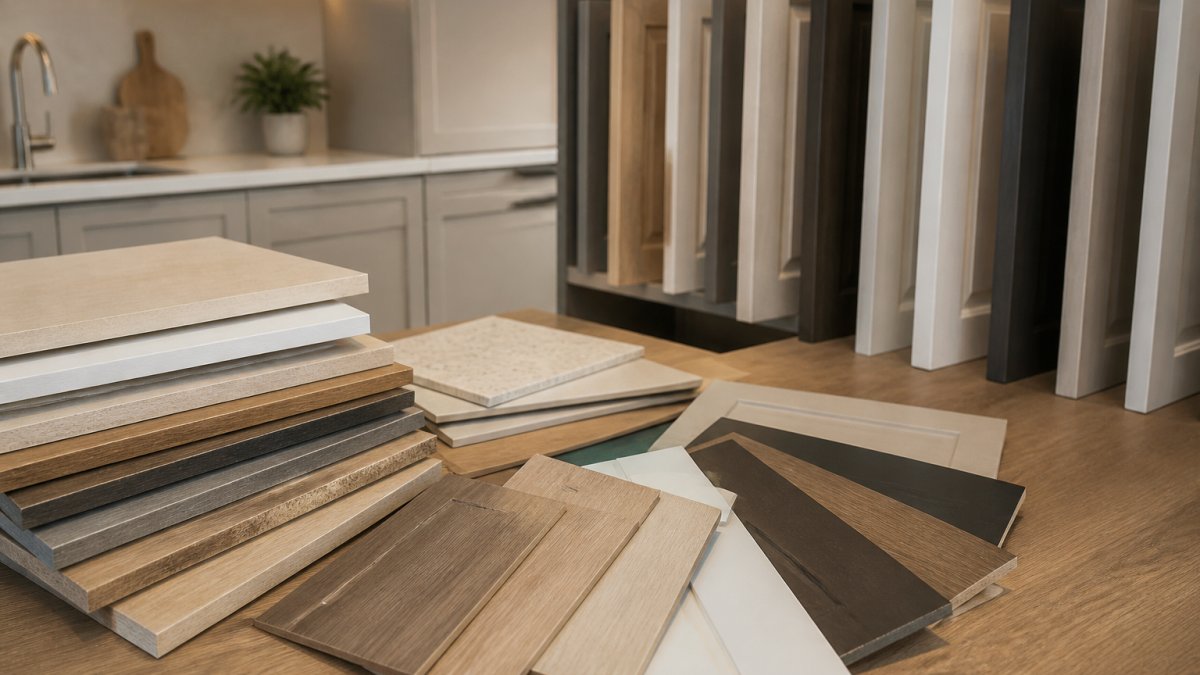
 ultimate-guide
Best Kitchen Cabinet Material for Durability
Last Updated: October 23, 2026
Quick Summary
The best kitchen cabinet material for durability depends on your environment: marine-grade plywood excels in damp conditions with 40-60 year lifespan, solid maple or cherry hardwood lasts 30-60 years in climate-controlled kitchens, and HPL laminate offers 20-30 years in busy family kitchens. Choose your kitchen cabinet material based on moisture exposure and maintenance priorities rather than aesthetics alone.
- Marine-grade plywood resists warping and swelling in humid environments better than solid wood
- Solid hardwood cabinets can be sanded and refinished multiple times, while engineered materials cannot be repaired
- HPL laminate resists heat, impact, and scratches better than any other finish option
- Moisture-resistant MDF lasts 15-25 years and works well for painted modern kitchens but has poor impact resistance
- Proper edge sealing and ventilation are critical for preventing water damage regardless of material choice
Table of Contents
- Overview of Kitchen Cabinet Materials and Durability
- Solid Wood vs Engineered Wood: Which Lasts Longer?
- Plywood vs MDF Kitchen Cabinets: Strength and Stability
- Waterproof Kitchen Cabinet Materials for Damp Environments
- PVC Kitchen Cabinets and Modern Finishes
- How to Maintain Kitchen Cabinets for Long-Term Performance
- Material Durability Scorecard: Comparing Real-World Performance
- Choosing the Right Material for Your Kitchen
- Frequently Asked Questions
Overview of Kitchen Cabinet Materials and Durability
Choosing the right kitchen cabinet material is one of the most consequential decisions in a renovation. It determines not just how your kitchen looks, but how it performs over decades of daily use.
This guide breaks down the most durable kitchen cabinet materials, comparing them on moisture resistance, scratch and dent durability, long-term stability, and repairability.
The material decision isn't just about the cabinet box. The door finish, edge sealing, and hardware attachment points all influence durability. A solid wood box paired with a weak laminate door will fail at the door.
Solid Wood vs Engineered Wood: Which Lasts Longer?
Solid wood cabinets have dominated for good reason: they're durable, repairable, and age beautifully. But "solid wood" covers many performance levels.
Engineered wood, plywood and MDF, offers stability solid wood cannot match. A solid wood door expands and contracts with humidity; an engineered door, properly sealed, won't move at all.
The trade-off is repairability. A solid wood cabinet with a scratch can be sanded and refinished. A veneered plywood cabinet with a scratch has exposed the veneer layer, and refinishing is complex.
Solid Oak and Maple Hardwood
Solid oak and maple are the workhorses of traditional cabinetry. Oak is heavier, with a pronounced grain that looks timeless or dated depending on your view.
Both woods resist fungal decay naturally and can be refinished multiple times. A 40-year-old solid oak cabinet can be stripped, sanded, and stained to look new again.
The limitations are real. Both woods are sensitive to humidity swings.
Cost is the other constraint. Solid hardwood cabinets are expensive, and the price reflects material scarcity more than durability.
Cherry Hardwood for Premium Kitchens
Cherry is the premium choice for solid wood cabinetry. It's harder than oak, fine-grained, and develops a rich patina as it ages, darkening and becoming more beautiful over time.
Durability is excellent. Cherry resists impact and scratching better than oak or maple, and it's naturally decay-resistant. The grain is tight enough that edge banding isn't always necessary, simplifying finishing.
The catch is cost and humidity sensitivity. Cherry is more expensive than oak or maple, and it still moves with humidity. In a dry kitchen with excellent climate control, cherry lasts indefinitely.
Plywood vs MDF Kitchen Cabinets: Strength and Stability
This is where the conversation shifts from aesthetics to engineering. Plywood and MDF are engineered woods made from wood fibres, veneers, or layers bonded with adhesive. They don't move with humidity. They're stable, flat, and consistent.
The durability question isn't whether they'll warp; it's whether they'll absorb water, whether the adhesive will fail, and whether the finish will hold up to impact and scratches.
Marine-Grade Plywood Construction
Marine-grade plywood is engineered for moisture resistance. It's made from multiple layers of veneer bonded with waterproof adhesive.
For cabinet boxes, marine-grade plywood is superior to solid wood in humid kitchens. It won't swell, warp, or cup.
The limitation is the visible edge. Plywood edges show the layered construction and look ugly without edge banding or veneer.
Repairability is limited. A damaged plywood cabinet can't be sanded and refinished like solid wood; the veneer is thin, and aggressive sanding goes through it.
Moisture-Resistant MDF Performance
MDF, medium-density fibreboard, is made from wood fibres compressed with resin.
For painted kitchen cabinets, MDF is excellent. The surface is perfectly smooth and uniform, so paint finishes are flawless and consistent.
Treated MDF's moisture resistance is good, but not as good as marine-grade plywood.
The real weakness is impact resistance. MDF is denser than plywood, making it heavier and harder to work with. More importantly, impact damage is permanent.
Weight is also a factor. MDF is heavier than plywood, which strains hinges and can cause sagging over time if the hardware isn't heavy-duty.
Waterproof Kitchen Cabinet Materials for Damp Environments
Marine-grade plywood is the best choice for cabinet boxes in damp environments. The waterproof adhesive and cross-grain construction resist moisture absorption.
For cabinet doors and surfaces, the finish matters as much as the substrate. A painted finish with proper sealing is more waterproof than a stained finish.
Avoid standard particleboard in wet areas. It absorbs water like a sponge, swells, and loses structural integrity.
Metal and stainless-steel cabinets are naturally waterproof, but they're uncommon in residential kitchens and more suited to commercial environments.
PVC Kitchen Cabinets and Modern Finishes
PVC and vinyl-based finishes have become mainstream in modern cabinetry. They're durable, low-maintenance, and offer design flexibility wood finishes can't match.
Thermofoil Vinyl Wrap Durability
Thermofoil is a vinyl coating applied to an MDF substrate under heat and pressure. It creates a seamless, continuous finish with no seams or edges.
For durability in normal kitchen use, thermofoil is solid. It resists scratches better than paint, and stains wipe off easily.
The vulnerability is heat. Thermofoil can peel or bubble if exposed to sustained high heat, near an oven, under a heat lamp, or in direct sunlight through a window.
Repairability is poor. If thermofoil peels, it's difficult to reglue it without visible seams. Damage usually means replacing the door.
High-Pressure Laminate and Melamine Options
High-pressure laminate (HPL) is made by fusing layers of paper and resin under extreme pressure. It's harder and more durable than thermofoil.
Melamine is a lower-cost laminate variant. It's not as durable as HPL, but still tough and affordable.
Both laminates are non-porous and easy to clean, resisting stains and moisture effectively. For busy family kitchens where durability is the priority, HPL is the best finish option available.
The downside is repairability. If laminate chips or cracks, it can't be sanded and refinished. Damage is permanent and visible.
How to Maintain Kitchen Cabinets for Long-Term Performance
Material choice determines the foundation, but maintenance determines the outcome. Even the best material will fail if neglected.
Clean spills immediately. Water sitting on a cabinet door or seeping into an edge gap will cause damage over time.
Avoid harsh chemicals and abrasive cleaners. They damage finishes and can degrade adhesives.
Seal edges properly during installation.
Ensure proper ventilation.
Check hinges and hardware regularly. Loose hinges cause doors to sag, stressing the attachment points and leading to damage.
Material Durability Scorecard: Comparing Real-World Performance
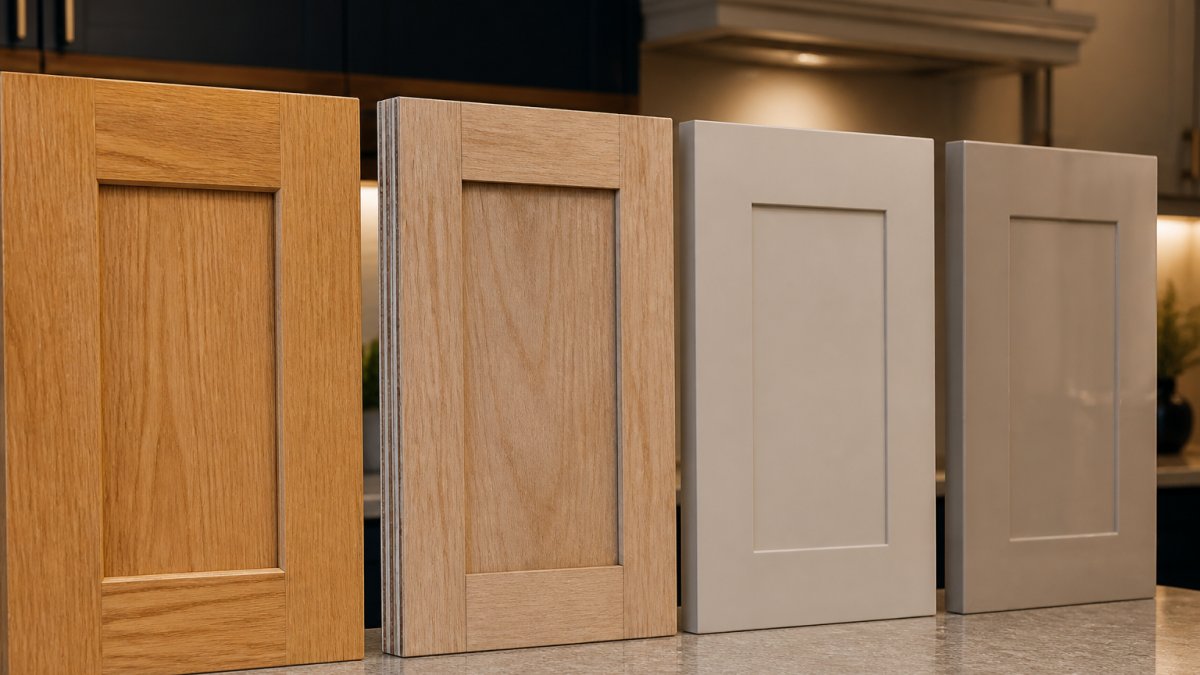
| Material | Moisture Resistance | Scratch Resistance | Impact Durability | Repairability | Lifespan | Best For |
|---|---|---|---|---|---|---|
| Solid Oak | Moderate | Moderate | High | Excellent | 30-50 years | Traditional kitchens with climate control |
| Solid Maple | Moderate | High | High | Excellent | 30-50 years | High-traffic kitchens, premium finishes |
| Cherry Hardwood | Moderate | High | High | Excellent | 40-60 years | Bespoke, high-end kitchens |
| Marine Plywood | Excellent | Moderate | High | Poor | 40-60 years | Damp environments, commercial use |
| MDF (Moisture-Resistant) | Good | Moderate | Low | Poor | 15-25 years | Painted, modern kitchens |
| HPL Laminate | Excellent | Excellent | Excellent | Poor | 20-30 years | Busy family kitchens, low-maintenance |
| Thermofoil | Good | Good | Moderate | Poor | 15-25 years | Budget-conscious, modern aesthetics |
| Melamine | Good | Moderate | Moderate | Poor | 10-20 years | Rental properties, budget kitchens |
The scorecard reveals a pattern: natural wood offers superior repairability and longevity but requires climate control and maintenance. Engineered materials and laminates offer superior moisture resistance and durability in harsh conditions but sacrifice repairability.
Choosing the Right Material for Your Kitchen
The best kitchen cabinet material depends on three factors: your environment, your budget, and how long you plan to keep the kitchen.
If you're in a dry climate with stable humidity and plan to stay 20+ years, solid hardwood is the best choice.
If your priority is low maintenance and you're budget-conscious, moisture-resistant MDF with a painted finish or thermofoil wrap is solid.
For trade professionals and kitchen fitters sourcing components, Wjskitchenwarehouse offers custom-made carcasses in marine-grade plywood and moisture-resistant MDF, with 14-day lead times and a full range of premium doors and finishes.
The material you choose today determines whether your renovation is a one-time investment or the first of several. Choose based on your actual environment and usage, not aesthetics alone.
Frequently Asked Questions
Which kitchen cabinet material is most resistant to moisture?
Marine-grade plywood and moisture-resistant MDF are the top choices for moisture resistance. Plywood uses water-resistant adhesive and has excellent dimensional stability, preventing swelling. MDF is specifically treated with resins to resist damp environments. Both outperform particleboard and solid wood in high-humidity kitchens. High-pressure laminate also resists moisture well due to its non-porous surface, making it ideal for kitchens near windows or with poor ventilation.
Is plywood or MDF better for kitchen cabinets?
Plywood is superior for cabinet carcasses because it offers better moisture resistance, higher screw-holding capacity for hardware, and greater strength-to-weight ratio. MDF works well for cabinet doors and painted finishes because it provides a smooth, uniform surface that resists warping and cracking. Many builders use plywood for the box and MDF for doors to balance durability and cost. Your choice depends on your kitchen environment and whether moisture exposure is a concern.
How long do solid wood kitchen cabinets actually last?
Solid hardwoods like oak, maple, and cherry can last 50+ years or more with proper maintenance. Their dense grain structure resists dents and scratches, and they can be refinished multiple times throughout their lifespan. However, they are susceptible to expansion and contraction in high-humidity environments, which can cause warping. Solid wood represents a long-term investment but requires careful maintenance in damp kitchens. Engineered alternatives like plywood may be more practical in moisture-prone areas.
What are the best practices for maintaining kitchen cabinets?
Clean regularly with a soft cloth and mild soap solution, avoiding excessive water. Wipe spills immediately, especially near sink areas. Use coasters under glasses to prevent water rings on wood surfaces. Avoid direct heat exposure from ovens or cooktops. For solid wood, apply furniture polish occasionally to maintain the finish. For laminate and PVC, use non-abrasive cleaners. Check hinges and handles quarterly and tighten if loose. Proper maintenance extends lifespan by 10+ years regardless of material.
Can PVC kitchen cabinets withstand daily wear and tear?
Yes. PVC finishes like thermofoil vinyl wrap offer excellent durability for busy kitchens. They resist stains, heat, and impact, with seamless surfaces that are easy to clean. Thermofoil can peel if exposed to excessive heat near ovens, so positioning matters. High-pressure laminate, another PVC-based option, is extremely durable and resists chemicals and abrasion. Both are lower-maintenance than solid wood and cost less, making them practical for families with children or heavy kitchen use.
What's the difference between particleboard and plywood for cabinet construction?
Particleboard is made from wood chips and resin, offering low cost but poor moisture resistance and weak screw-holding capacity. Plywood consists of bonded veneer layers, providing superior strength, moisture resistance, and durability. Particleboard swells and warps when exposed to humidity, while plywood remains stable. Plywood costs more but lasts significantly longer, especially in kitchens. For cabinet carcasses, plywood is the better investment; particleboard is only suitable for budget projects in dry environments.
Are solid wood kitchen cabinets more durable than engineered wood?
Solid wood is durable but not necessarily more so than quality engineered alternatives. Solid hardwoods like oak last 50+ years and can be refinished. However, they warp in humid kitchens. Marine-grade plywood resists moisture better, prevents warping, and holds hardware securely. The best choice depends on your kitchen environment: solid wood for dry, traditional kitchens; plywood for moisture-prone areas or high-traffic families. Construction quality and material thickness matter more than the material type alone.
The durability of your kitchen cabinets depends on matching the material to your home's conditions and maintaining it properly. Wjskitchenwarehouse provides custom-made cabinet carcasses in marine-grade plywood and moisture-resistant MDF, paired with premium doors from leading manufacturers. Our design service ensures every component is specified for your specific kitchen environment. Contact us for a quote or design consultation, and let's build cabinets that last.