 ultimate-guide
Choosing High Quality Kitchen Cabinet Doors: A 2026 Guide
Table of Contents
- Understanding Kitchen Cabinet Door Styles
- Kitchen Cabinet Door Materials: Which Perform Best
- Kitchen Cabinet Door Finishes and Their Durability
- How to Measure Kitchen Cabinet Doors Correctly
- Colour Choices and Current Design Trends
- Quality Indicators and What to Inspect Before Ordering
- Budgeting and Total Cost of Ownership
- Frequently Asked Questions
Last Updated: October 15, 2026
Understanding Kitchen Cabinet Door Styles
When you're choosing high quality kitchen cabinet doors, the style sets the visual tone for your entire kitchen. At Wjskitchenwarehouse, we help homeowners and trade customers match style to their space and renovation goals.
Three main door styles dominate the market: Shaker, flat-front, and in-frame doors.
Shaker doors
Shaker doors feature a recessed panel surrounded by a solid frame, creating a five-piece construction (four frame pieces plus one centre panel).
The frame-and-panel construction offers practical benefits: the recessed centre panel expands and contracts with humidity, reducing warping risk compared to solid-slab alternatives, making Shaker doors suitable for kitchens exposed to moisture or temperature swings.
Flat-front and slab doors
Flat-front doors, also called slab doors, have a completely smooth surface with no visible frame or panel detail.
The trade-off is stability. Without frame-and-panel construction, flat-front doors depend entirely on the material's stability and finish quality to resist warping and moisture damage.
In-frame doors
In-frame doors sit within a permanent frame attached to the cabinet carcass, so the frame, not the door, carries the structural load. Common in bespoke and higher-end kitchens, this style allows precise fitting and a built-in appearance.
In-frame construction offers superior longevity because the frame absorbs stress and movement, protecting the door panel, and is often seen in kitchens built to last 20+ years.
Kitchen Cabinet Door Materials: Which Perform Best
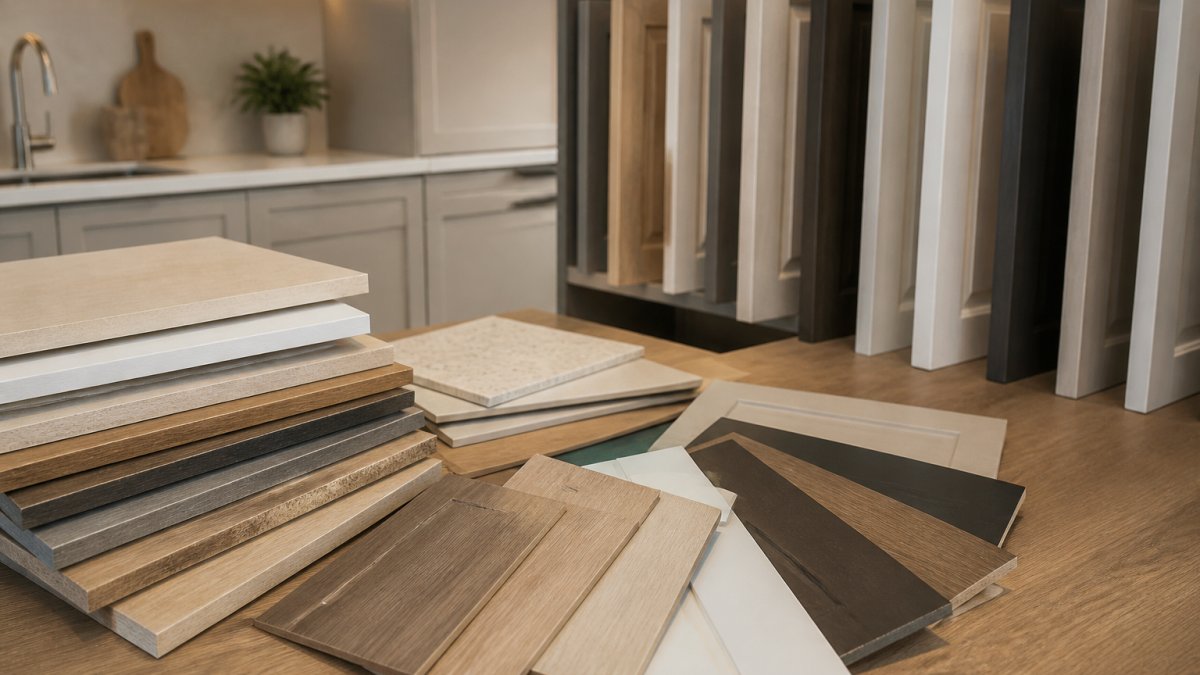
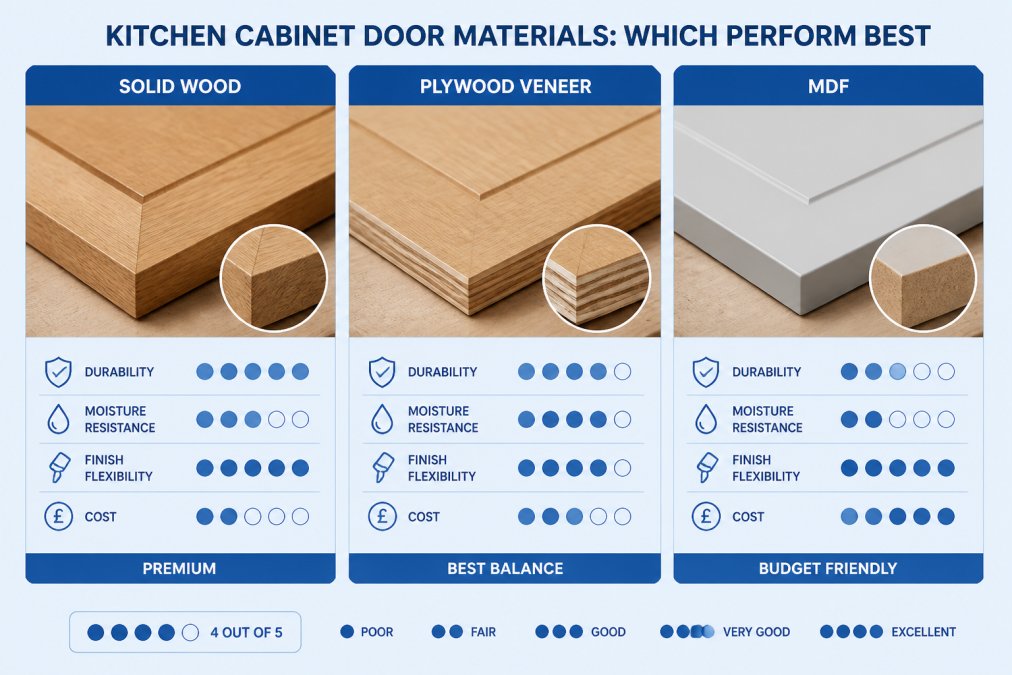
The material you choose determines how your kitchen cabinet doors age, resist moisture, and handle daily wear.
Solid wood and hardwood options
Solid wood doors offer genuine aesthetic appeal and very long lifespans.
The practical challenge with solid wood is movement: wood expands and contracts with humidity and temperature changes.
Solid wood doors require regular maintenance: painted finishes need periodic touch-ups, and natural wood finishes need resealing every few years.
Plywood construction
Plywood doors use a plywood sheet as the base, typically faced with veneer or paint.
Birch and poplar plywood are common choices for kitchen cabinet doors, both stable, finish-friendly, and good value.
Plywood doors are repairable, but repair quality depends on the damage: a dent in the veneer is hard to fix invisibly, while edge damage where layers separate needs careful re-gluing and sealing.
MDF and engineered alternatives
Medium-density fibreboard (MDF) is made from compressed wood fibres bonded with resin. Affordable, stable, and taking paint beautifully, it's popular for painted kitchen doors, with no grain variation and a perfectly smooth paint surface.
The weakness of MDF is moisture sensitivity: it absorbs water readily and, once saturated, swells and becomes difficult to dry.
MDF doors aren't repairable once damaged: a chip, dent, or water damage can't be fixed invisibly, and the material isn't refinishable, so changing colour means new doors rather than repainting.
Kitchen Cabinet Door Finishes and Their Durability
The finish protects the underlying material and determines how the door looks and feels: a poor finish can ruin high-quality material, while an excellent finish can extend the life of a modest door.
Painted finishes
Painted doors offer unlimited colour choices and a clean, contemporary appearance.
The challenge with painted finishes is maintenance: paint can chip, scratch, or develop wear marks, particularly on frequently handled doors near the main work area.
Quality matters enormously: a single-coat budget paint chips easily, while a multi-coat, high-build system (primer plus 2-3 topcoats) resists chipping and wear far better.
Laminate and veneer finishes
Laminate is a thin plastic sheet bonded to the door surface.
The limitation of laminate is repairability: damage (scratches, dents, or peeling) is difficult to repair and often visible.
Veneer is a thin slice of real wood glued to a plywood or MDF base, offering the aesthetic of solid wood with the stability of engineered materials.
Wood grain and natural finishes
Natural wood finishes showcase the actual grain and colour of the wood, but require regular maintenance, typically resealing every 2-3 years with oil, wax, or polyurethane.
Natural finishes work best on solid wood or high-quality veneer doors, and are less suitable for MDF or budget plywood, where the underlying material's imperfections become visible.
How to Measure Kitchen Cabinet Doors Correctly
Accurate measurements are essential: a door even 5mm too large or too small will either not fit or leave gaps. Measurement errors are the most common reason custom doors don't fit properly.
Taking accurate measurements
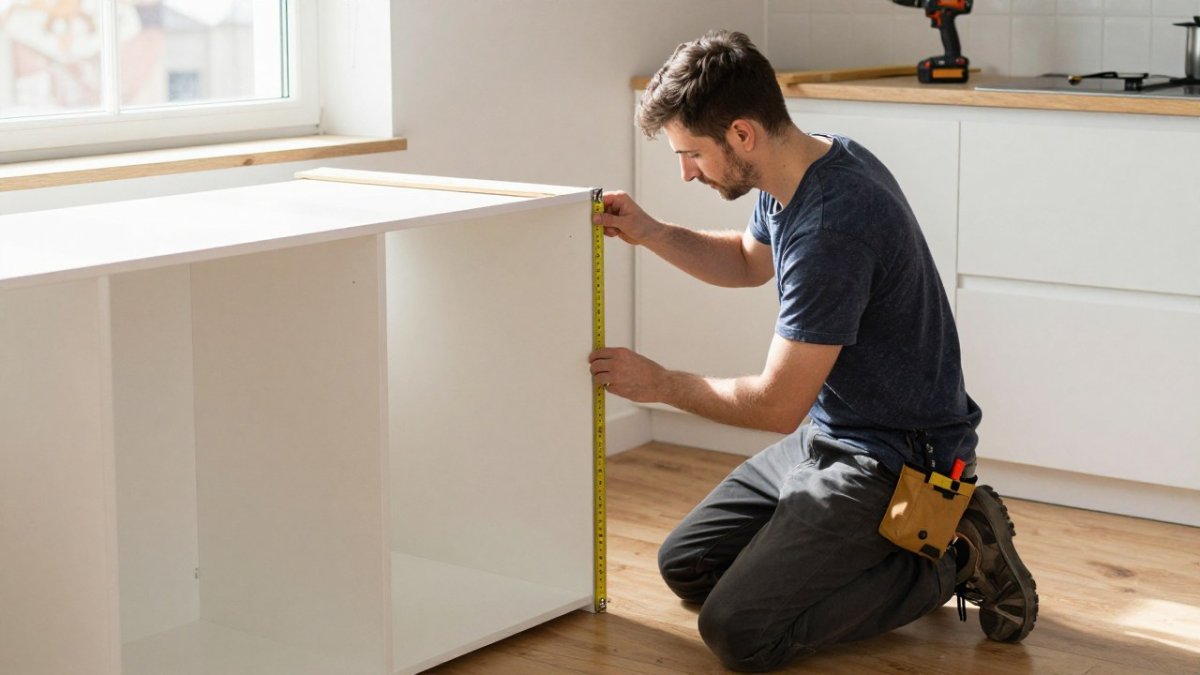
Measure the width of the door opening at three points: top, middle, and bottom.
Measure the height at the left edge, centre, and right edge, again using the smallest measurement.
Measure twice: a simple error can result in doors that don't fit, and reordering custom doors costs time and money. Photograph your written measurements and have a second person verify them if possible.
Understanding door frame dimensions
The door frame (the part that attaches to the cabinet carcass) adds width and height to the overall door assembly, typically 20-30mm. Understand whether your measurements include the frame or just the door panel, as manufacturers measure differently.
If you're replacing existing doors, measure the existing frame carefully: new doors must fit the same space, accounting for hinges and any adjustments needed for alignment.
Custom sizing and made-to-measure options
Custom-made doors allow for precise sizing to your exact cabinet dimensions.
Made-to-measure doors eliminate guesswork and reduce the risk of gaps or misalignment. The cost is higher than stock doors, but the fit is perfect and the lead time suits most renovation schedules.
Colour Choices and Current Design Trends
Colour choice affects the entire visual impact of your kitchen. Beyond personal preference, consider how the colour interacts with your worktops, flooring, and wall finishes.
Neutral and timeless palettes
White, cream, and pale grey doors remain the safest choice for longevity, working with virtually any worktop material and not feeling dated in five or ten years.
Neutral doors also hide wear better than bold colours. Minor marks, dust, and fingerprints are less visible on grey or cream than on white or black.
Bolder statement colours
Navy blue, forest green, and charcoal grey have become increasingly popular in contemporary kitchens, creating visual interest and pairing well with brass or gold hardware.
Bold colours also show marks more visibly: a navy door shows fingerprints and dust more obviously than a grey one. If you choose a bold colour, budget for more frequent cleaning or accept that the doors will show wear.
Quality Indicators and What to Inspect Before Ordering
Before ordering kitchen cabinet doors, evaluate the quality indicators that predict long-term performance.
Door frame construction and joinery
Examine how the frame pieces are joined.
Check the frame thickness: a substantial frame (25mm or thicker) resists warping and handles door weight better than a thin one.
For plywood or veneer doors, inspect the edge banding: edges should be sealed completely with matching banding or paint, since exposed plywood edges absorb moisture and swell, eventually causing the veneer to peel.
Resistance to warping, moisture, and wear
Ask the manufacturer about the material's stability. Plywood and MDF are inherently more stable than solid wood, but quality varies.
Check the finish thickness: a thick, multi-coat finish protects better than a thin single coat. Ask whether it includes a primer layer, which improves adhesion and provides additional protection.
Inspect sample doors if possible. Look for visible defects: uneven grain, colour variation, or rough surfaces.
Certifications and sustainable sourcing
Look for FSC (Forest Stewardship Council) or PEFC (Programme for the Endorsement of Forest Certification) certification on solid wood and plywood doors, indicating the wood comes from responsibly managed forests.
Check whether the manufacturer provides information about finish durability or moisture resistance. Some finishes are specifically formulated for kitchen use and include antimicrobial properties or enhanced water resistance.
Budgeting and Total Cost of Ownership
The cheapest doors aren't always the best value. Consider the total cost over the door's expected lifespan, including maintenance and potential replacement.
Initial purchase versus long-term value
Budget doors (MDF with thin paint) might cost 40-50% less than quality plywood doors, but if they fail or require replacement within 5-7 years, you'll spend more overall than if you'd purchased quality doors initially.
Mid-range plywood doors with quality paint finishes offer good value, affordable enough for most budgets but durable enough to last 10-15 years with minimal maintenance.
Maintenance and replacement costs
Consider the cost of failure. If a door warps or delaminates mid-kitchen-life, replacement is expensive and disruptive. Quality doors reduce this risk significantly.
Choosing high quality kitchen cabinet doors is one of the most visible decisions in a kitchen renovation.
At Wjskitchenwarehouse, we've spent over 30 years helping homeowners and trade customers navigate this decision.
Frequently Asked Questions
What type of kitchen cabinet doors are best for a busy family?
Durability depends on your household use. Painted finishes on solid wood or plywood resist daily wear well, but require touch-ups over time. Laminate and veneer finishes are easier to clean and more forgiving with moisture, making them practical for families with children. MDF works affordably but is less moisture-resistant than solid wood. Choose based on your climate, how much cooking you do, and your tolerance for maintenance. Custom-made doors allow you to specify materials suited to your exact needs.
How do I measure kitchen cabinet doors for replacement?
Measure the width and height of the door opening from inside the frame. Use a metal tape measure and take three measurements across the width (top, middle, bottom) and three down the height (left, centre, right) to account for any unevenness. Note the depth of your cabinet units and whether doors open inward or outward. Document the hinge style and position. Many suppliers, including those with over 30 years' experience, offer design services to verify your measurements before production begins, reducing the risk of errors.
Are solid wood or MDF kitchen doors better?
Solid wood offers superior durability, resists warping in variable humidity, and lasts 15-20 years or more with proper care. MDF is budget-friendly, stable in consistent indoor conditions, but more vulnerable to moisture damage and typically lasts 10-15 years. Hardwoods like birch are stronger than softwoods. Your choice depends on budget, kitchen humidity, and how long you plan to keep the doors. Plywood sits between them, offering good stability and durability at moderate cost. Consider your climate and usage patterns when deciding.
What finish is easiest to clean on kitchen cabinet doors?
Laminate and painted finishes are the easiest to clean because they resist moisture and don't absorb spills. A simple wipe with a damp cloth removes grease and dust. Natural wood finishes require more care: they can stain if liquids sit too long and need periodic sealing. Matte painted finishes show fingerprints less than gloss but can be harder to wipe clean. Gloss finishes are easiest to wipe but highlight smudges. Consider your cooking habits and willingness to maintain finishes when choosing between easy-clean laminates and higher-maintenance natural woods.
How long do quality kitchen cabinet doors typically last?
Well-made solid wood doors last 15-20 years or longer with proper care and maintenance. Plywood doors typically last 12-18 years, while MDF doors usually perform well for 10-15 years in standard kitchen conditions. Lifespan depends on material quality, finish durability, humidity levels, and how much the doors are used. Moisture exposure significantly shortens life, so kitchens with poor ventilation see faster deterioration. Painted finishes may need refreshing every 5-7 years. Custom-made doors from experienced suppliers with FSC or PEFC certification tend to outlast budget alternatives.
What should I look for when inspecting kitchen cabinet door quality before ordering?
Check the frame construction. Verify the door is flat and free from warping. Ask about moisture resistance and whether the finish seals the wood properly. Request samples and compare thickness, weight, and finish quality. Suppliers offering design services and custom-made options typically stand behind their quality with guarantees on fit and construction.
Should I choose painted or natural wood finish kitchen cabinet doors?
Painted doors offer a cohesive, modern look and hide wood grain imperfections. They're easier to clean and can be refreshed by repainting. Natural wood finishes showcase grain character and develop patina over time, but require more maintenance and are harder to clean. Painted doors work well in contemporary kitchens and with bold colour schemes. Natural finishes suit traditional and transitional designs. Consider your kitchen's overall aesthetic, how much maintenance you're willing to do, and whether you prefer the warmth of wood grain or the clean lines of painted surfaces. Both can be made to order to suit your exact specifications.