 ultimate-guide
How to Measure and Replace Kitchen Cupboard Doors
Quick Summary
Replacing kitchen cupboard doors is often the smartest route when your kitchen still works but the doors look tired. New doors fit your existing carcasses, so the layout, worktops and appliances stay in place, avoiding the cost and disruption of a full refit.
- Measure each door separately to the nearest millimetre, since cupboards on the same wall are not always identical.
- Check hinge count, cup spacing and whether hinges are concealed or surface-mounted before ordering.
- MDF is stable for painted finishes, solid wood can be refinished, and laminate is low-maintenance.
- Matte finishes hide fingerprints better than gloss, which shows marks more clearly.
- Compare quotes using an itemised breakdown, since the door price alone can hide extra costs.
Table of Contents
- Why Replacing Kitchen Cupboard Doors Can Be Better Than a Full Refit
- How to Measure Kitchen Cupboard Doors Correctly
- Choosing Materials, Finishes and Door Styles
- What Replacement Kitchen Cupboard Doors Cost
- Fitting Replacement Kitchen Doors Yourself or With a Fitter
- Ordering Custom Doors From Wjskitchenwarehouse and Next Steps
- Frequently Asked Questions
Why Replacing Kitchen Cupboard Doors Can Be Better Than a Full Refit
Last Updated: November 12, 2026
If your kitchen still works but the doors look tired, replacing the kitchen cupboard doors is often the smartest route. Many homeowners want a new look without the cost, mess and disruption of stripping out a whole kitchen.
Many homeowners find that the carcasses are still sound even when the doors have warped, chipped or faded. In that situation, swapping the doors is usually the more sensible option.
A full refit makes sense when the carcasses are damaged, the layout no longer suits how you cook, or the units are too small for your storage needs.
How to Measure Kitchen Cupboard Doors Correctly
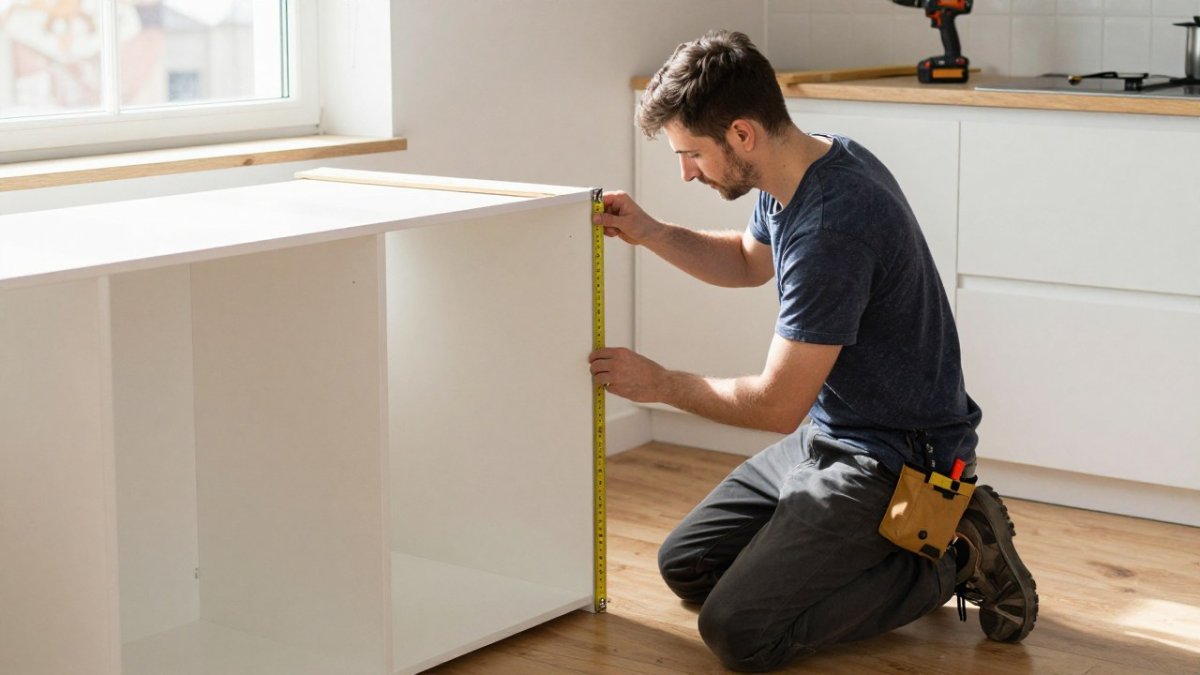
Measuring accurately is the single step that most affects whether new doors fit. For a fuller walkthrough, see how to measure kitchen cabinets correctly.
Measure the opening as well as the door. Gaps between doors and frames are normal, but you need to know the exact overlap your current doors have. Take readings to the nearest millimetre and write them down before you order anything.
Checking Hinge Positions and Drilling Patterns
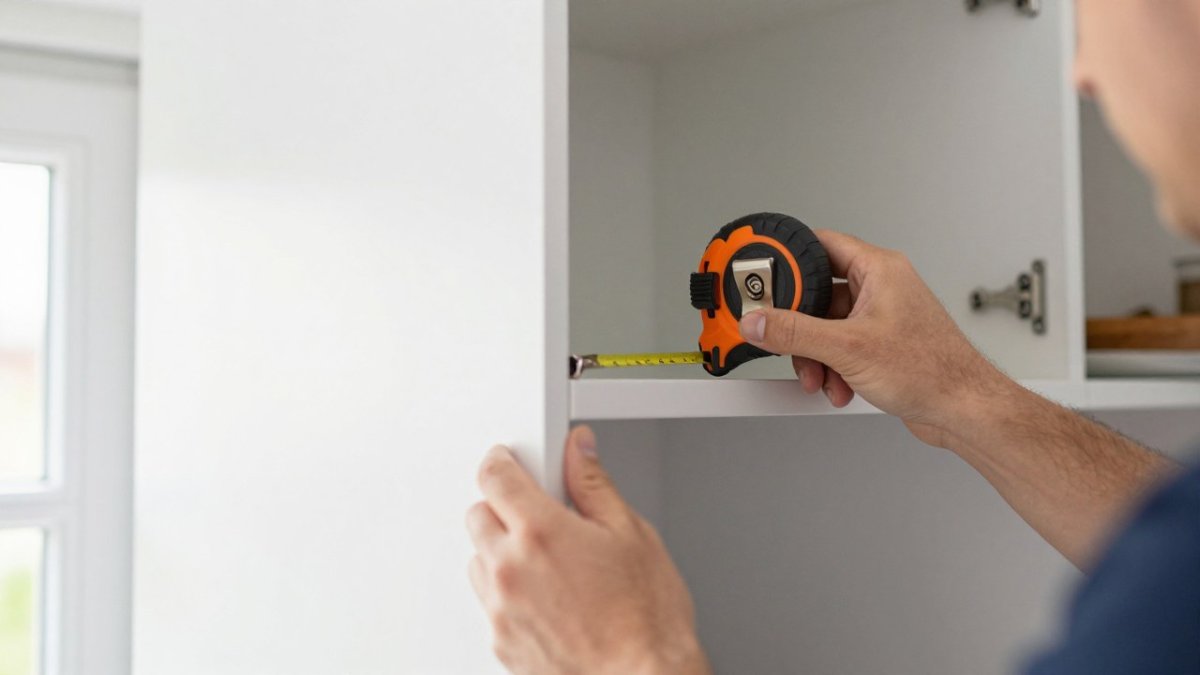
Hinge positions decide whether a replacement door will sit correctly. Check how many hinges each door uses, how far they sit from the top and bottom edges, and whether the cups are concealed or surface-mounted. Matching these details on the new door saves a great deal of frustration on fitting day.
Drilling patterns matter just as much. Measure the centre-to-centre distance between hinge cups and the distance from the door edge to the first hole. If you are changing door styles, confirm that the drilling pattern on the new door matches your carcass, or plan for minor adjustments.
Using a Printable Measuring Checklist
A checklist keeps your measurements consistent. Print the list below, complete it for each door, and keep it with your order details.
- Door height (top to bottom), to the nearest millimetre
- Door width (edge to edge), to the nearest millimetre
- Door thickness
- Number of hinges per door
- Hinge cup distance from top and bottom edges
- Hinge cup centre-to-centre spacing
- Distance from door edge to first drilling
- Hinge type (concealed or surface-mounted)
- Door location and position on the wall
- Photo of each door for reference
Choosing Materials, Finishes and Door Styles
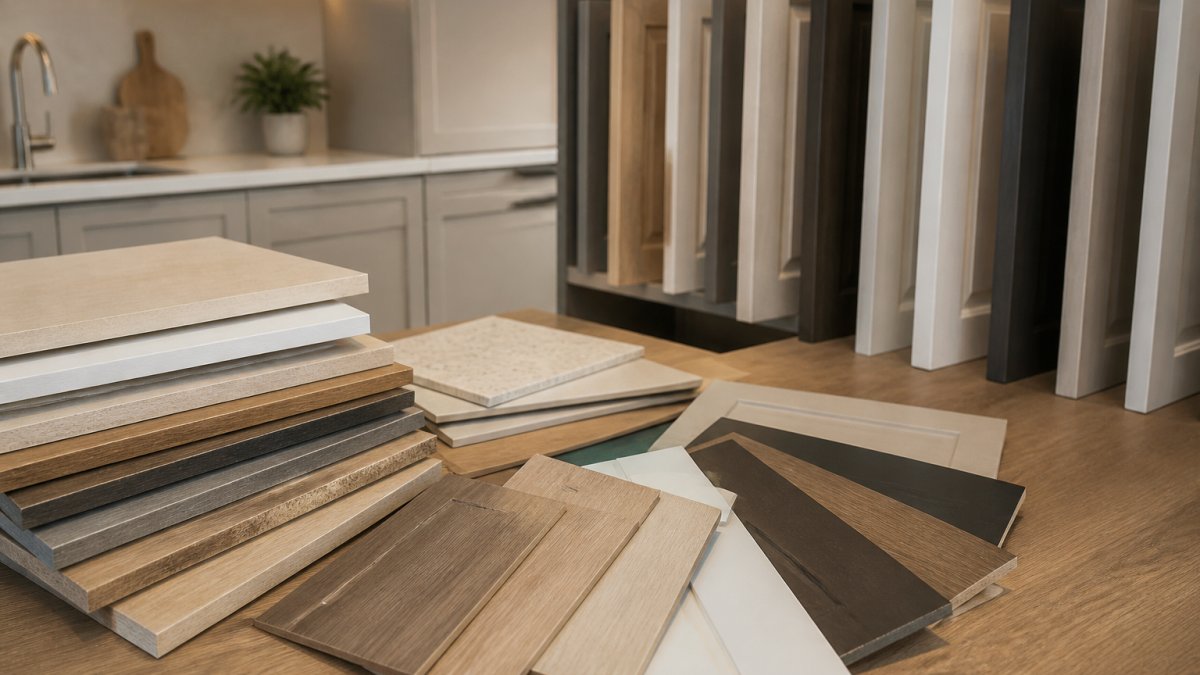
Materials and finishes shape both the look and the lifespan of your doors. MDF is stable and gives a smooth surface for painted and gloss finishes. Solid wood has a natural grain and can be refinished, but it moves more with humidity.
Door styles range from Shaker frames to flat slab designs. Shaker doors suit traditional and transitional kitchens, while slab doors suit a modern look with clean lines.
Consider how you use the kitchen. Households that cook daily often benefit from wipe-clean finishes and well-sealed edges, while a formal dining kitchen can carry a more delicate painted finish.
Material Comparison: Durability, Maintenance and Best Use
The table below compares the four materials most commonly used for replacement cupboard doors. It is a neutral comparison based on how each material behaves in normal kitchen conditions, not a ranking.
| Material | Durability | Maintenance | Moisture behaviour | Best suited to |
|---|---|---|---|---|
| MDF (painted or wrapped) | Good; resists warping and takes a smooth finish | Wipe with a damp cloth; avoid abrasive cleaners on painted surfaces | Stable in normal humidity; edges must be sealed | Painted Shaker and slab doors; households wanting a smooth, uniform finish |
| Solid wood | Very good; can be sanded and refinished | Occasional oiling or re-painting depending on finish | Moves with humidity; can swell or shrink slightly | Traditional kitchens; homeowners who want a repairable, natural surface |
| Laminate | Good; resistant to scratches and stains | Wipe clean; avoid sharp implements near edges | Resists moisture well if edges are sealed | Busy family kitchens; low-maintenance requirements |
| Painted timber or MDF | Good; finish can be touched up | Touch up chips as they occur; avoid harsh chemicals | Stable if edges and backs are sealed | Period properties and colour-led designs |
A common pattern is for homeowners to choose laminate for a busy family kitchen and painted MDF for a more design-led space. Neither is wrong; the decision usually comes down to how much maintenance you are willing to do and how much you value a repairable surface.
Finish Options and What They Mean in Practice
Matte finishes hide fingerprints and small marks well, which makes them a practical choice for households with children. Gloss finishes reflect light and can make a small kitchen feel larger, but they show marks and smudges more clearly and need more frequent wiping.
Textured and woodgrain finishes add visual interest and can disguise minor scuffs, but they are harder to touch up if damaged.
Watch out: gloss and high-sheen finishes show every mark under direct light, so view a sample in your own kitchen lighting before committing to a full order.
Door Styles and How They Affect the Rest of the Kitchen
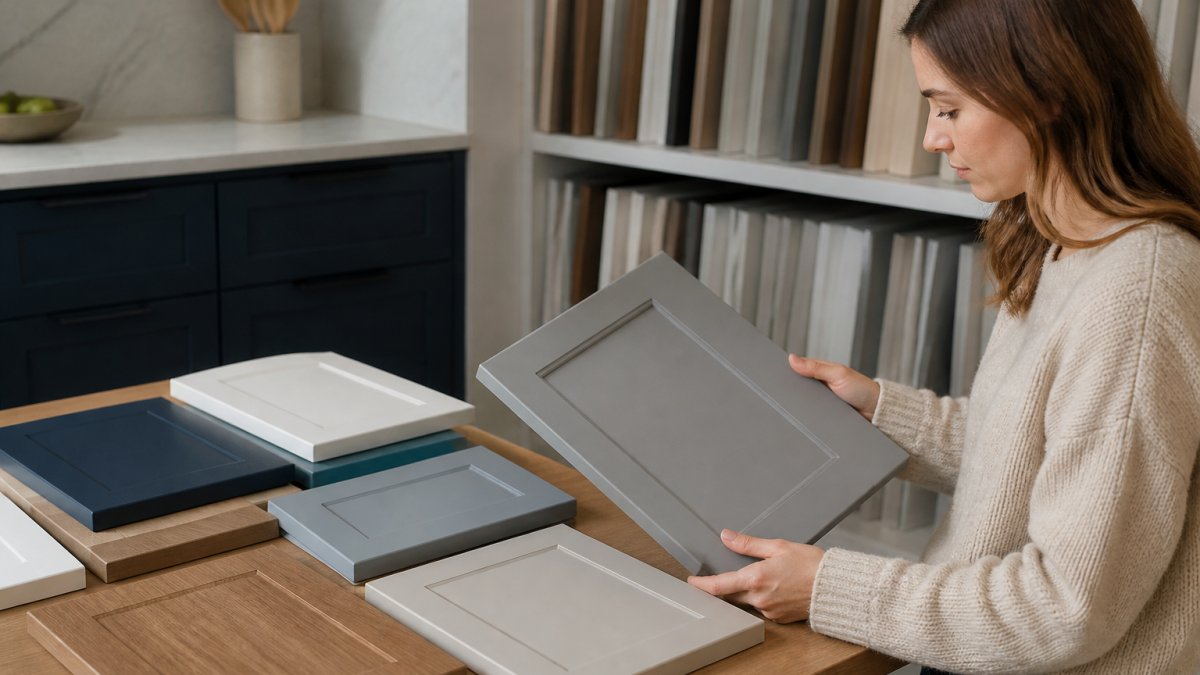
Shaker doors have a recessed centre panel and a raised frame, which suits traditional and transitional kitchens and works well with both painted and woodgrain finishes. Slab doors are flat and handleless-friendly, suiting modern kitchens with clean lines. Beadboard and tongue-and-groove styles add texture and suit period properties.
Style choice affects more than appearance. A framed Shaker door has more edges to collect grease, so it needs slightly more cleaning than a flat slab. A slab door with a push-to-open mechanism removes the need for handles entirely, which can be useful in a small kitchen but requires reliable hinges.
Matching Doors to Your Existing Kitchen
If you are keeping your worktops and appliances, choose a door finish that complements rather than competes with them. A common approach is to match the door colour to the worktop tone and use handles to introduce contrast. If you are replacing doors as part of a wider refresh, take a sample door home and view it next to your existing surfaces in daylight and under your kitchen lighting before placing the order.
What Replacement Kitchen Cupboard Doors Cost
Pricing depends on the material, finish, door style, quantity and delivery requirements, so there is no single figure that applies to every kitchen. Costs also vary with whether you need made-to-measure sizes or standard sizes. For current prices and a quote tailored to your kitchen, check our website or speak to our team directly.
When comparing quotes, look at the total cost of the job rather than the price per door alone. Factor in hinges, handles, any drawer fronts you need, delivery charges and whether fitting is included. A lower door price can be offset by extras that are not on the first quote.
A Realistic Cost Breakdown for a Replacement Door Project
Quotes for replacement doors usually include several cost lines beyond the door panels themselves. The table below sets out the cost lines you should expect to see on any quote, so you can compare like for like.
| Cost line | What it covers | Typical share of project cost |
|---|---|---|
| Door panels | The replacement fronts themselves, priced per door or per square metre depending on the range | 50-65% |
| Drawer fronts | Matching fronts for drawer boxes, often priced separately from cupboard doors | 5-15% |
| Hinges | Soft-close concealed hinges, usually sold in pairs or packs | 5-10% |
| Handles | Knobs, bar handles or cup handles, priced per item | 3-8% |
| Delivery | Pallet or courier delivery, sometimes free above a minimum order value | 2-6% |
| Fitting | Labour if you use a fitter rather than fitting yourself | 10-25% |
Typical share of project cost
Worked Example: A Mid-Sized Kitchen
Take a typical mid-sized kitchen with 20 cupboard doors, 6 drawer fronts, 40 hinges and 26 handles. Using mid-range made-to-measure painted doors, a realistic budget might break down as follows:
- Door panels: £1,200-£2,400 depending on range and finish
- Drawer fronts: £120-£360
- Hinges: £80-£200
- Handles: £60-£180
- Delivery: £40-£90
- Fitting (if used): £300-£700
That puts a realistic all-in figure at roughly £1,800-£3,930 for the project, with the door panels themselves making up the largest single line. A full kitchen refit in the same space would typically run to several times that figure once units, worktops, appliances, plumbing, electrics and tiling are included, which is why replacement doors remain the value route when the carcasses are sound.
When comparing quotes, ask for an itemised breakdown rather than a single per-door price.
How to Compare Quotes Fairly
Ask every supplier to quote on the same basis: the same number of doors and drawer fronts, the same hinge type, the same handle specification and delivery to the same address. Check which items are included in the quote and which are charged as extras.
For current prices and a quote tailored to your kitchen, check our website or speak to our team directly.
Fitting Replacement Kitchen Doors Yourself or With a Fitter
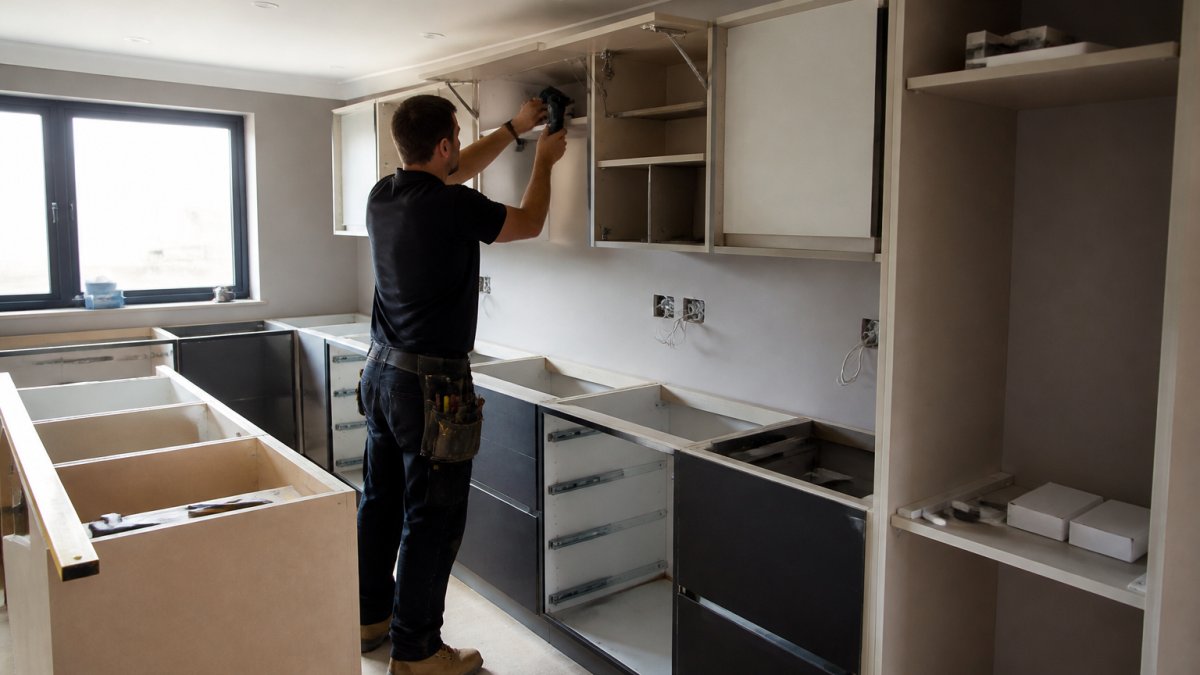
Fitting replacement doors is a manageable job for a confident DIYer, provided the carcasses are square and in good condition. You can follow a step-by-step guide to installing base units to see what the process involves. Start by checking that each carcass is level and that the hinge mounting points are secure.
Hire a fitter if the carcasses are uneven, if the job involves complex alignment across many units, or if you are unsure about the drilling. To see what a professional job involves, read our professional kitchen fitting guide.
Tools You Will Need
- Tape measure and spirit level
- Cordless drill with a countersink bit
- Screwdriver set for hinge and handle screws
- Pencil and masking tape for marking positions
- Clamps to hold doors while you check alignment
Ordering Custom Doors From Wjskitchenwarehouse and Next Steps
Once your measurements are complete, you are ready to order. Our guide to buying custom kitchen doors online explains each step of placing an order. Wjskitchenwarehouse supplies both trade and retail customers, and our design service uses Articad CAD software to help you plan your doors before you commit.
Once your order is confirmed, keep your old doors until the new ones are fitted and checked.
Replacing kitchen cupboard doors can transform a tired kitchen without the cost of a full refit. Get started with Wjskitchenwarehouse by sending us your measurements, and we will help you plan doors that fit correctly the first time.
Frequently Asked Questions
Is it cheaper to replace kitchen doors or the whole kitchen?
In most cases, replacing cupboard doors and drawer fronts costs considerably less than a full kitchen replacement, because the carcasses, worktops and appliances stay in place. The final figure depends on the number of doors, the chosen material and finish, whether custom sizing is needed, and delivery. Wjskitchenwarehouse provides custom-made doors, and current prices and a quote for your specific project are available on the website.
How do I measure kitchen cupboard doors correctly?
Measure the height and width of each door at its widest and tallest points, and check whether the existing door overlaps the carcass or sits inset. Record hinge positions and the drilling pattern, then take the door thickness. Measure each door separately rather than assuming they are identical, and use a printable checklist to keep the figures together before ordering.
Can I replace kitchen cupboard doors myself?
Yes, many homeowners fit replacement doors themselves, provided the carcasses are sound and the hinge positions and drilling match. The job needs a drill, a screwdriver, a tape measure and a spirit level. If the hinges are concealed or the doors are heavy, or if the measurements do not line up, a professional fitter may be the safer option.
Do standard kitchen cupboard doors fit all carcasses?
Not always. Carcasses vary in height, width and hinge spacing, and older kitchens often use different hinge systems. Confirm the carcass dimensions and hinge positions before ordering, or send your measurements to the design team at Wjskitchenwarehouse so the doors can be made to suit your existing units.