 blog
Kitchen Kit Alternatives for Residential Projects
Table of Contents
- Kitchen Kit Alternatives for Residential Projects: What Your Options Are
- Flat-Pack Kitchen Alternatives and When They Make Sense
- Bespoke Kitchen Cabinets: Custom Solutions for Your Space
- Ex-Stock Kitchen Units: Speed and Quality Combined
- Kitchen Supplier Comparison: What Sets Quality Suppliers Apart
- Making Your Choice: Which Kitchen Kit Alternative Suits Your Project
- Frequently Asked Questions
Last Updated: October 12, 2026
Kitchen Kit Alternatives for Residential Projects: What Your Options Are
When you're planning a kitchen renovation, the choice between different kitchen kit alternatives can make or break your project timeline and budget. At Wjskitchenwarehouse, we've worked with hundreds of homeowners and builders to understand what really matters when selecting the right approach for your space.
The market offers several distinct paths forward. You can go flat-pack, order bespoke custom units, or choose ex-stock components that arrive quickly. Each has genuine trade-offs. The real skill isn't picking the "best" option, it's matching the right approach to your specific situation.
Most homeowners assume one solution works for everyone. That's where projects stumble. A tight timeline demands different thinking than a budget-conscious renovation. A small kitchen with awkward corners needs something entirely different from a straightforward extension space.
Flat-Pack Kitchen Alternatives and When They Make Sense
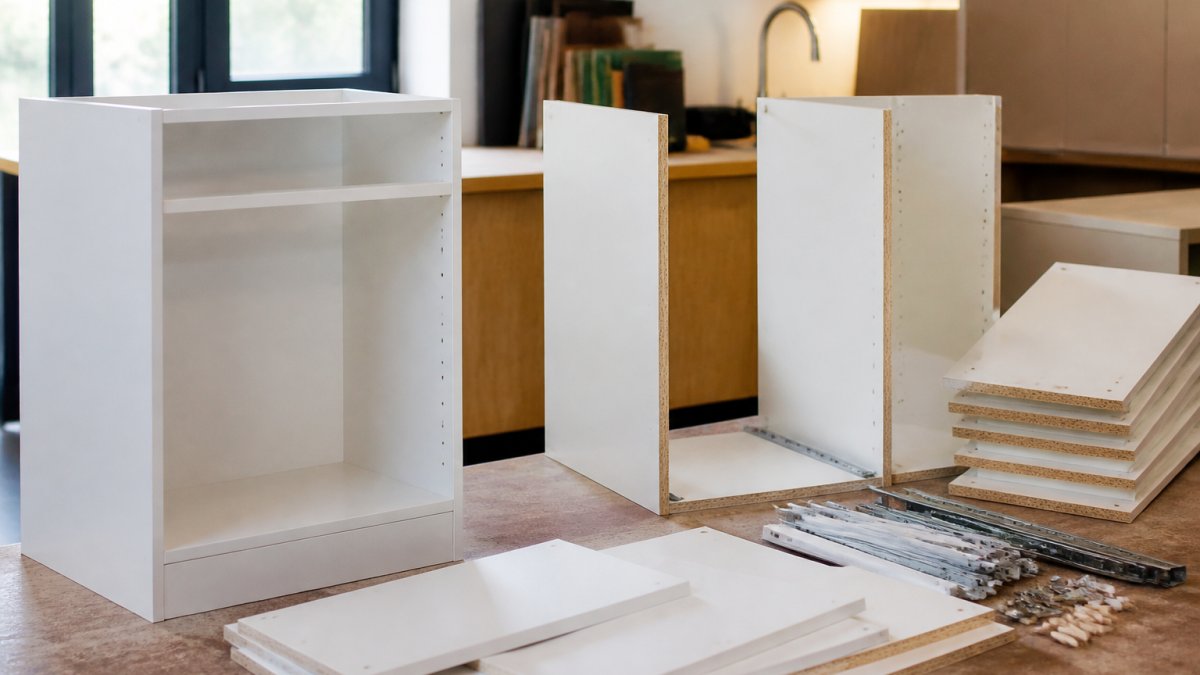
Flat-pack kitchens appeal to budget-conscious homeowners because the upfront cost feels lower. You assemble components yourself or hire a fitter to do it. The appeal is obvious: quick delivery, predictable pricing, minimal customisation.
Here's what most people discover too late: flat-pack works brilliantly for standard layouts. Walk into a kitchen with non-standard dimensions, angled walls, or specific design requirements, and flat-pack becomes a frustrating compromise. You're forcing your space into someone else's template rather than building something that actually fits.
The real limitation isn't quality, modern flat-pack systems use decent materials. The limitation is flexibility. You get what's in the catalogue. Want a specific depth for your corner unit? Not available. Need a particular finish that matches your home's aesthetic? Choose from the standard range or move on.
For straightforward projects, flat-pack kitchen alternatives make genuine sense. Clean rectangular spaces, standard ceiling heights, and conventional appliance placements all work well. The assembly time is predictable. Replacement parts are easy to source. You know exactly what you're getting.
The trade-off: you're optimising for cost and speed, not for creating something that feels custom-built for your home.
Bespoke Kitchen Cabinets: Custom Solutions for Your Space
Custom-made kitchen cabinets solve the fundamental problem with flat-pack: they're built for YOUR space, not a generic template. This is where kitchen kit alternatives diverge most sharply.

Bespoke cabinets start with measurement and design. A professional designer works with you to understand your workflow, storage needs, and aesthetic preferences. They create detailed plans, often using CAD software like Articad, that show exactly what you're getting before a single component is manufactured.
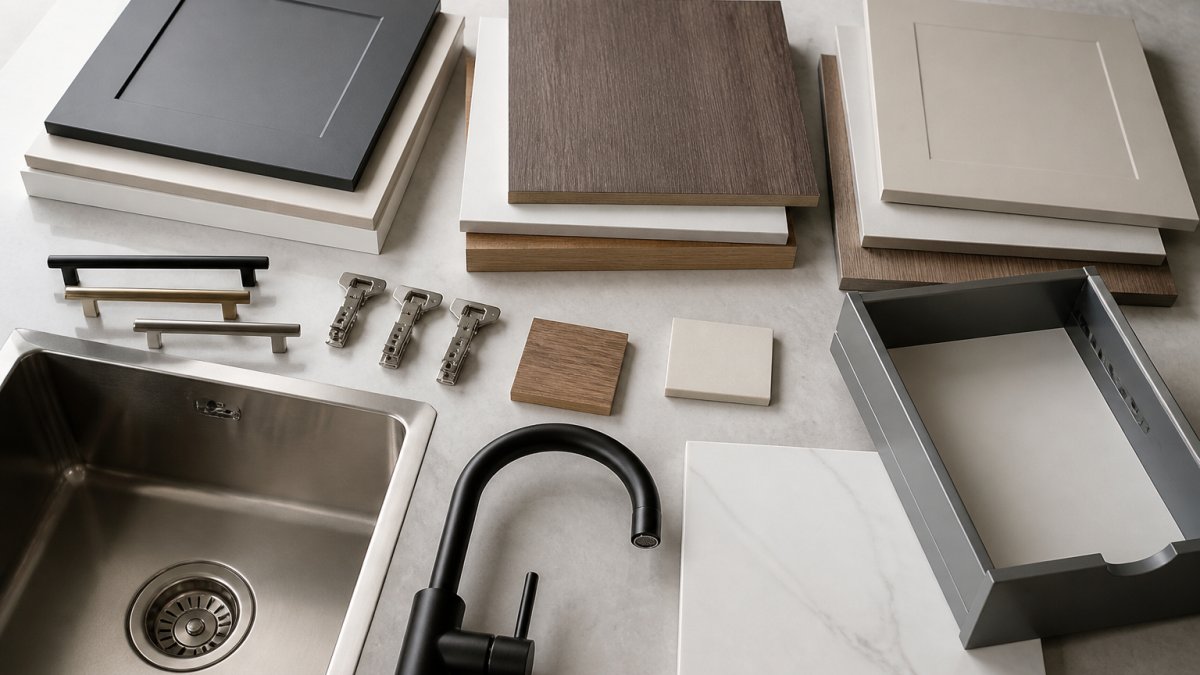
This approach transforms what's possible. Angled walls? No problem. Specific dimensions for a corner unit? Done. A particular finish that complements your home's character? Built to spec. You're not compromising on your vision to fit a product, the product is built to fit your vision.
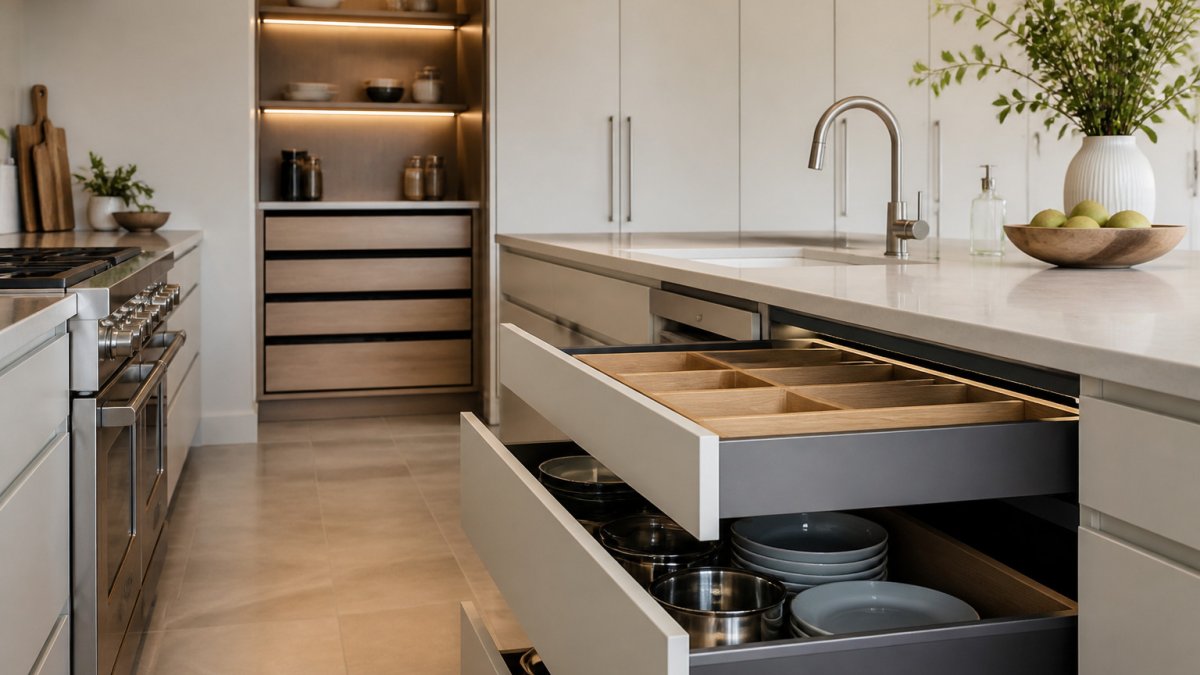
The lead times are typically 14 days for manufacturing, which is faster than many expect. Quality components from suppliers like Blum and Hettich mean your custom cabinets perform as well as they look. Soft-close mechanisms, precision hinges, and durable finishes become standard rather than premium upgrades.
The investment is higher than flat-pack. Custom work requires design time, precision manufacturing, and quality materials. But you're paying for something that actually solves your specific problem rather than forcing compromise after compromise.
Ex-Stock Kitchen Units: Speed and Quality Combined
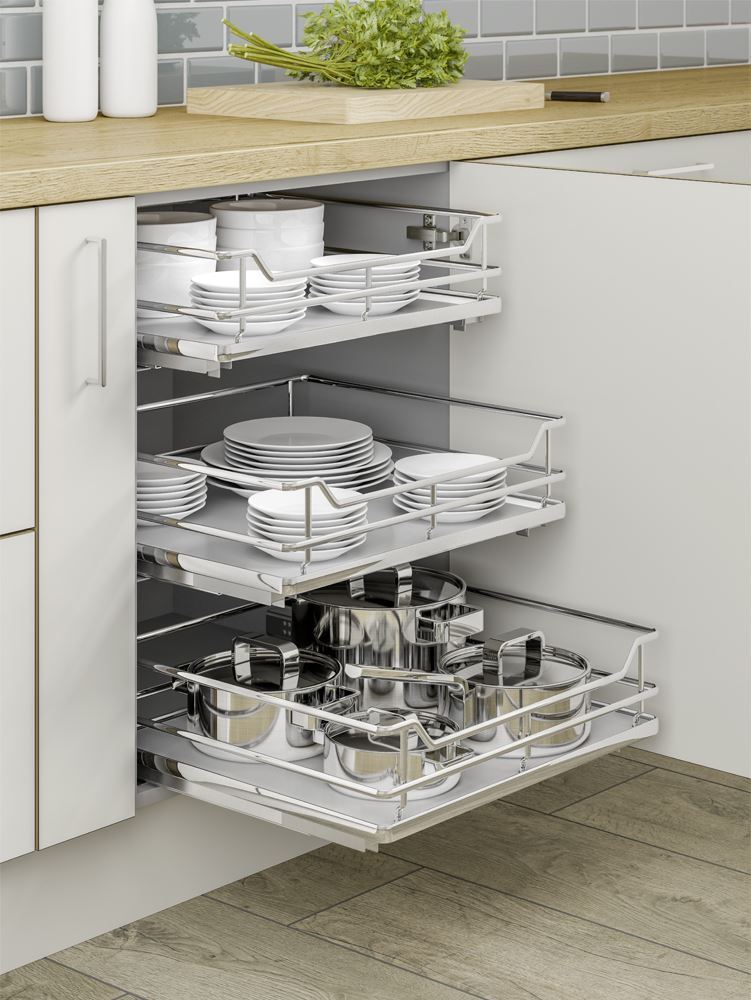
Ex-stock components represent a middle ground that often gets overlooked. These are quality kitchen units that are already manufactured and ready to ship, typically within days rather than weeks.
The advantage is immediate: you get speed without sacrificing quality. These aren't leftover flat-pack components or discontinued lines. They're carefully selected units that match professional standards, often featuring the same premium components as custom alternatives.
Ex-stock kitchen units work particularly well for projects where you have a clear timeline. If you need your kitchen functional by a specific date, ex-stock components remove the manufacturing wait. You're not gambling on lead times or hoping custom orders arrive on schedule.
The flexibility is real but bounded. You're choosing from existing inventory rather than designing from scratch. This means some customisation is possible, you can often combine different units, adjust configurations, and select finishes from available options, but you're still working within what's currently available.
For many residential projects, this balance hits the sweet spot. You avoid the flat-pack compromise of forcing your space into a standard template. You also avoid the extended lead times and higher costs of fully bespoke solutions. Quality is maintained, speed is realistic, and pricing remains reasonable.
Kitchen Supplier Comparison: What Sets Quality Suppliers Apart
Not all kitchen suppliers operate the same way. The difference between working with a genuinely good supplier and a mediocre one shapes your entire experience.
Quality suppliers start with expertise. They understand kitchen design, workflow, and how different components actually perform. They can guide you toward solutions that work rather than selling you what's easiest to stock. When you describe your project, they ask the right questions: How do you use your kitchen? What frustrates you about your current setup? What's your realistic timeline?
Professional design services matter more than most homeowners realise. A supplier offering proper CAD design, using tools like Articad, gives you something tangible to review before committing. You see exactly what you're getting. Changes are easy to make on screen before anything is manufactured.
Stock availability is another crucial differentiator. A supplier with deep inventory of quality components can often deliver ex-stock units within days. This isn't about having everything in warehouse, it's about stocking the right things that customers actually need.
Communication and support throughout the project separates good suppliers from the rest. You need someone who's available when questions arise, who can troubleshoot issues quickly, and who treats your project like it matters. This is especially true if you're a homeowner managing your own renovation rather than working through a professional builder.
Wjskitchenwarehouse operates with this approach. Over 30 years of experience means we've learned what actually works for residential projects. Our design service using Articad CAD software gives you professional plans before manufacturing begins. We supply both retail customers and trade professionals, that dual experience means we understand residential needs alongside builder requirements.
Making Your Choice: Which Kitchen Kit Alternative Suits Your Project
The right kitchen kit alternative depends on four concrete factors: your timeline, your budget, your space requirements, and your design expectations.
Timeline-driven decisions: If you need your kitchen functional within weeks, ex-stock components or flat-pack make sense. Custom alternatives require design time plus manufacturing. If you have flexibility, custom solutions allow you to get exactly what you want without compromise.
Budget considerations: Flat-pack typically costs least upfront, though you may sacrifice customisation. Bespoke costs more but solves specific problems. Ex-stock sits between them, better than flat-pack for awkward spaces, faster than full bespoke.
Space requirements: Standard rectangular kitchens work with any approach. Irregular dimensions, angled walls, or specific storage needs push you toward custom solutions. This is where flat-pack struggles most.
Design expectations: If you have a specific vision for how your kitchen should look and function, bespoke cabinets deliver that. If you're comfortable with standard options, flat-pack works fine. Ex-stock offers more customisation than flat-pack but less than bespoke.
Most successful residential projects combine approaches. You might use ex-stock components for straightforward areas and add custom units where your space demands something specific. A professional supplier can help you identify where customisation matters and where standard solutions work perfectly.
The question isn't which kitchen kit alternative is best in absolute terms. It's which one solves YOUR specific problem without unnecessary compromise. That's the difference between a kitchen that works and one that frustrates you for years.
Choosing kitchen components shouldn't mean compromising between cost, quality, and timeline. Wjskitchenwarehouse combines all three through custom-made carcasses with 14-day lead times, professional design services using Articad CAD software, and premium components from Blum and Hettich. Whether you need flat-pack simplicity, bespoke customisation, or ex-stock speed, our team helps you navigate kitchen kit alternatives that actually fit your project. Contact Wjskitchenwarehouse for a design consultation and get a professional plan before you commit to anything.
Frequently Asked Questions
What are the main alternatives to a flat-pack kitchen?
The primary alternatives to flat-pack kitchens are bespoke custom-made cabinets, ex-stock kitchen units ready for immediate delivery, and semi-custom options that blend flexibility with speed. Bespoke solutions offer complete customisation to your space and preferences, typically with 14-day lead times for made-to-measure carcasses and doors. Ex-stock units arrive quickly, often within days, making them ideal for tight timelines. Semi-custom options provide a middle ground with faster delivery than full bespoke but more choice than standard flat-pack. Your choice depends on your budget, timeline, and how specific your space requirements are.
How do I compare kitchen suppliers for a residential project?
When evaluating kitchen suppliers, assess their experience in residential projects, the range of components they stock, design support availability, and delivery timescales. Check whether they supply both trade and retail customers, as suppliers serving both segments often understand diverse project needs. Review the quality of hardware brands they stock (premium hinges and drawer systems matter for longevity), ask about guarantees on custom-made items, and request references from previous residential projects. Compare their design service capabilities, CAD software and professional planning can prevent costly mistakes. Finally, verify lead times for both custom and ex-stock items to ensure they align with your project schedule.
Are ex-stock kitchen units good quality?
Ex-stock kitchen units can be excellent quality, particularly from suppliers with decades of experience and established relationships with premium component manufacturers. Quality depends on the supplier's sourcing standards and the brands they stock. Reputable suppliers stock ex-stock items from proven manufacturers, ensuring the same durability as made-to-order alternatives. The advantage of ex-stock is immediate availability without compromising on materials or construction. When selecting ex-stock units, check the supplier's track record, the specific brands included in their range, and whether they offer the same guarantees as custom-made items.
What should I check before ordering kitchen cabinets and components?
Before ordering, verify your measurements are accurate, this is critical for both custom and ex-stock items. Confirm the supplier's lead time and delivery schedule against your project timeline. Check what's included in the price (doors, handles, internal fittings) to avoid surprise costs. Ask about the supplier's policy on modifications or cancellations if your plans change. Review the specification of components like hinges and drawer runners, as these affect long-term performance. If ordering custom items, request detailed design drawings or CAD visuals to confirm everything matches your vision. Finally, confirm warranty terms and what happens if components arrive damaged or don't fit as expected.