 how-to
How Do You Organise Deep Bedroom Drawers Properly?
Last Updated: November 8, 2026
Quick Summary
To organise deep drawers, measure the internal dimensions first, then declutter and sort clothing by type. Fold items vertically so each one stays visible, and use drawer dividers to keep every category in its own lane.
- Measure the internal width, depth and height, not the outside carcass.
- Remove anything you have not worn in a year before organising.
- Fold shirts and trousers vertically so each stack stays visible.
- Keep each stack the same height so stacks do not slide into each other.
- Move rarely used clothes to the bottom drawers and everyday items to the top.
Table of Contents
- Why Deep Bedroom Drawers Become Messy So Quickly
- Measure Your Drawer Before Buying Any Organisers
- Declutter and Sort Clothing by Type Before You Organise
- Folding Clothes for Drawer Storage So Nothing Gets Lost
- Using Drawer Dividers for Deep Drawers
- Organising a Chest of Drawers Without Buying Anything
- Keeping Your Deep Drawers Organised Long Term
- Frequently Asked Questions
Why Deep Bedroom Drawers Become Messy So Quickly
Deep drawers are one of the hardest storage spaces to keep tidy. Clothes pile up, things slide to the back, and within a few weeks the drawer looks like a jumble. The problem is rarely the drawer itself. It is that most people pile items on top of each other with no clear place for anything.
In a deep drawer, the items at the bottom are the ones you rarely see. So you stop checking them, and they stay buried. This is the real cost of depth. Without structure, a deep drawer hides things rather than storing them.
Watch out: stuffing a deep drawer to the top makes every item harder to reach, and the drawer will jam or stick long before it is full.
Measure Your Drawer Before Buying Any Organisers
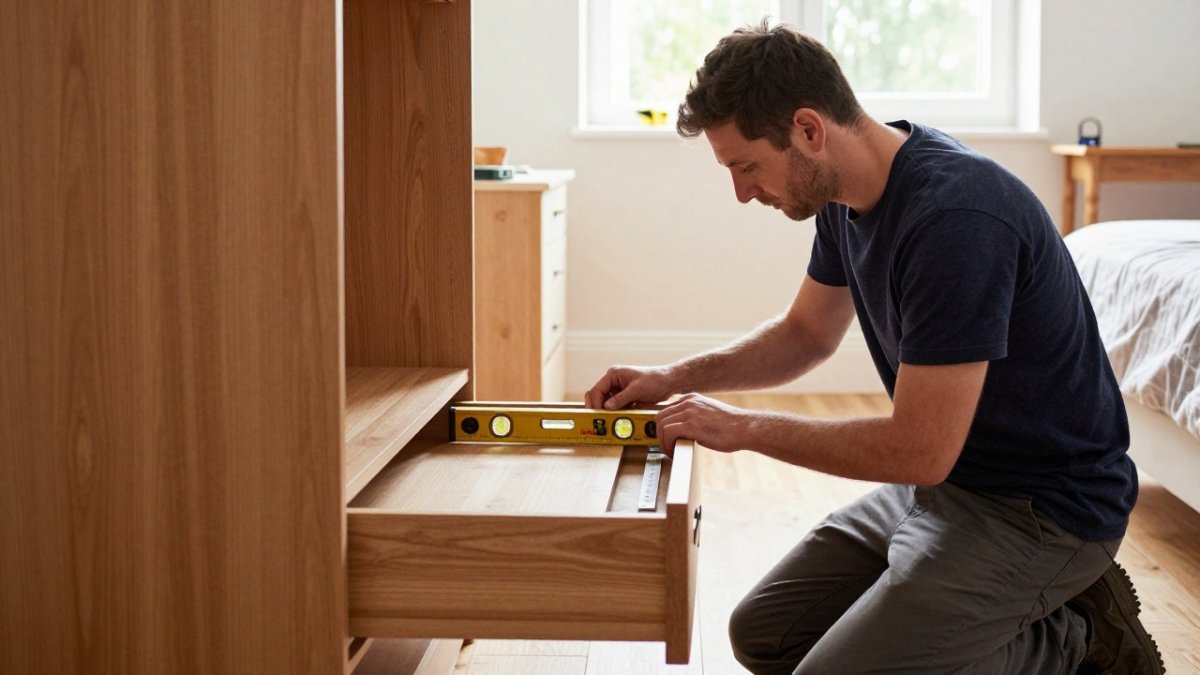
Before you buy a single organiser, measure the drawer properly. Take three internal measurements: the width from side to side, the depth from front to back, and the height from the drawer base to the top of the drawer side. Measure inside the frame, not the outside carcass, because the runners and frame take up space.
Write the numbers down and allow a small clearance so that bins and dividers do not bind on the runners when the drawer moves.
Then match those dimensions to the product. Check the internal dimensions of the organiser, not the external footprint, and confirm the height clears your tallest folded stack plus a finger's width so you can lift items out. For adjustable dividers, check the minimum and maximum span they cover; for modular bins, check whether they are designed to sit side by side without wasted gaps.
Deep drawers need a second measurement that most guides skip: the usable vertical depth. If the drawer is deeper than about 15 cm from base to side, a single layer of organisers wastes the space above.
Watch out: measuring only the drawer opening rather than the internal base will give you a false width if the drawer tapers or has internal runners, and the organiser will not sit flat.
For guidance on taking accurate cabinet dimensions, see How to Measure Kitchen Cabinets Correctly. It covers the same measuring principles, which apply to bedroom furniture too.
Declutter and Sort Clothing by Type Before You Organise
Organising a full drawer is wasted effort if half of what is inside should go. Empty the drawer completely and put everything on the bed. Then sort clothes into three piles: keep, donate, and unsure.
Once you have a keep pile, group the clothes by type. Put all socks together, all underwear together, all T-shirts together, and so on. This makes it obvious how much space each category needs and where it should sit in the drawer.
- Remove anything that no longer fits or that you have not worn in a year
- Group items by category, not by colour or season
- Set aside clothes you wear rarely so they do not take prime space
Folding Clothes for Drawer Storage So Nothing Gets Lost
Folding is the step that decides whether you can see your clothes at all. Folded stacks should be short enough to see the top item in each stack without lifting anything.
Fold shirts and trousers into neat rectangles, then stand them on their short edge so the full stack is visible when you open the drawer. This is often called vertical folding. Roll socks and underwear into small bundles, or fold them flat and place them in small containers.
Hands neatly folding a T-shirt into a vertical rectangle beside an open bedroom chest of drawers with rolled socks and underwear sorted into small containers.
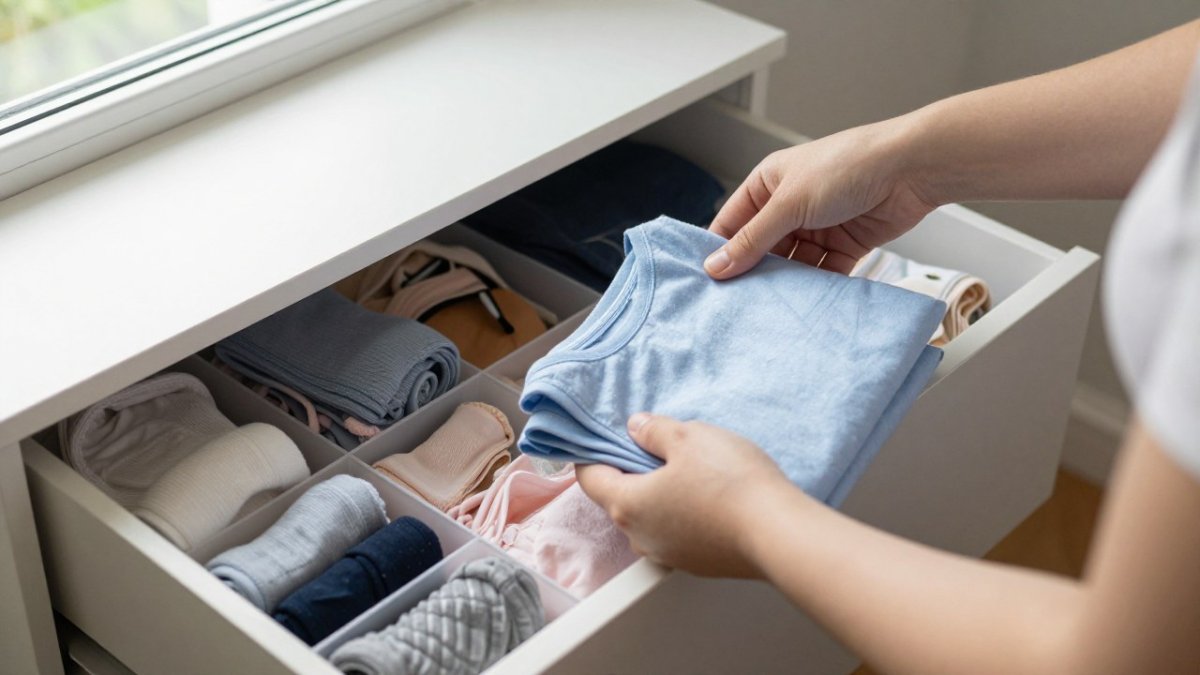
Keep each stack the same height. Uneven stacks slide into each other and hide the items underneath.
Using Drawer Dividers for Deep Drawers
Drawer dividers are the simplest way to stop items sliding into each other. A divider creates a lane for each category, so a row of folded shirts stays in its own space.
Choose adjustable dividers if your drawer layout changes often. Choose fixed dividers or boxed organisers if you want a permanent layout. For deep drawers, a divider that reaches close to the full depth works best, because it keeps the stacks upright.
Organising a Chest of Drawers Without Buying Anything
You do not need new products to improve a chest of drawers. Start by moving the items you use most to the top drawers, where they are easiest to reach. Put seasonal or rarely used clothes in the bottom drawers.
Use what you already own. Shoeboxes, shallow baskets and cereal boxes all work as small containers for socks and accessories. Fold clothes vertically so they stand upright, and you will see every item without digging.
Many people find that a simple reshuffle solves most of the problem. Moving one category to a different drawer often frees up more space than buying a new organiser.
Keeping Your Deep Drawers Organised Long Term
A well-organised drawer slips back into chaos within weeks if you do not maintain it. Set a quick routine: each time you put laundry away, return items to their own category lane and refold any stack that has collapsed. Keep each stack the same height so uneven stacks do not slide into each other and hide the items underneath.
Check your drawers once a month. Remove anything you no longer wear, re-square any dividers that have shifted, and check that the drawer still closes without resistance. This takes minutes and stops small disorder from becoming a full reset.
Troubleshoot the common failures rather than starting over. If dividers shift, check whether they are tension-mounted and whether the drawer sides are clean and dry; a divider that relies on friction will creep if the drawer is overfilled or the sides are dusty. If stacks collapse, the cause is usually a stack taller than the divider or a folded item wider than its lane, refold to the lane width and keep the stack below the divider height. If the drawer becomes overfilled, move the least-used category to a different drawer rather than compressing everything; a deep drawer that is stuffed to the top makes every item harder to reach and the runners will strain long before the drawer is full.
For more storage ideas that work beyond the drawer itself, see Bespoke Bedroom Storage Design Ideas 2026, which covers wider options for bedroom layouts. If you are weighing up organisers on the market, 9 Best Kitchen Drawer Storage Solutions for 2026 compares a range of drawer products.
Common drawer problems usually have a clear cause and a simple fix.
| Problem | Cause | Fix |
|---|---|---|
| Dividers shift | Tension-mounted, drawer sides dusty or wet | Re-square dividers and clean the drawer sides |
| Stacks collapse | Stack taller than divider, or item wider than lane | Refold to lane width, keep stacks below divider height |
| Drawer sticks or jams | Drawer stuffed to the top | Move least-used category to another drawer |
| Items lost at the back | Piles stacked with no clear place for items | Give each category its own lane |
Getting deep drawers right comes down to measuring first, sorting by type, folding for visibility and maintaining the system. At Wjskitchenwarehouse, we supply custom-made bedroom components and a design service to help you plan storage that fits your space. Get in touch and our team will help you find the right layout.
Frequently Asked Questions
How do you organise deep bedroom drawers?
Start by emptying the drawer and removing anything you no longer wear. Sort the remaining clothing into categories such as tops, bottoms, socks and underwear. Fold items vertically so each one can be seen at a glance, then place dividers or small containers to keep each category in its own zone. Store the items you use most often towards the front, where you can reach them without digging through the stack.
How do you stop clothes getting lost at the back of deep drawers?
Clothes disappear at the back of deep drawers because stacks collapse and items are piled too high. Fold garments vertically so they stand upright in a row rather than sitting in a deep pile. Use adjustable drawer dividers or fabric bins to split the drawer into shorter sections, and keep the back zone for seasonal or rarely worn pieces so the front stays easy to access.
Are drawer dividers useful in deep dresser drawers?
Yes. Adjustable dividers stop folded clothing from sliding and collapsing into one heap, which is the main reason deep drawers become messy. Measure the internal width and depth of your drawer before buying, as dividers that are too large will not sit square. Dividers work best when paired with vertical folding, since each section then holds a clear row of clothing you can see when the drawer opens.
How do you organise socks and underwear in deep drawers?
Keep socks and underwear in small containers or dedicated compartments rather than loose in the drawer. Roll socks in pairs or fold them into a small bundle, then arrange them upright in a row. Use one container per category, such as socks, underwear and sleepwear, so you can see what you have and put things back in the same place every time.